

Late in the afternoon, you notice a certain type of silence in a Harvard genetics lab. Pipettes make a click. Somewhere, a centrifuge hums. Additionally, an aged human cell—a worn-out, senescent fibroblast that had long since stopped dividing—appears younger than it should on a screen in David Sinclair’s group. Four days.
There are six molecules. Additionally, the team’s findings, which were published in the journal Aging, indicate a quantifiable reversal of what we have long believed to be a one-way street.
| The Anti-Aging Protocol — Key Information | |
|---|---|
| Principal Investigator | Dr. David Sinclair, Professor of Genetics |
| Institution | Harvard Medical School, Department of Genetics |
| Co-Direction | Paul F. Glenn Center for the Biology of Aging |
| Foundational Discovery | 2006 Yamanaka factors — OCT4, SOX2, KLF4, c-MYC |
| Key Study Published In | The journal Aging, peer-reviewed |
| Number of Effective Cocktails | Six small-molecule combinations |
| Cellular Age Reduction Observed | Over three years in four days (C1, C2, C3) |
| Method of Measurement | Nuclear compartmentalization assay + transcription-based aging clock |
| Related Compound | NMN (precursor to NAD), studied for DNA repair in mice |
| Stage of Research | Pre-clinical; human trials anticipated |
| Risk Note | Cocktails did not trigger stem cell markers NANOG or EPCAM |
It’s difficult to ignore how casually Sinclair discusses all of this during his public appearances. “Until recently, the best we could do was slow aging,” he stated in a study-related press release. “New discoveries suggest we can now reverse it.” Biologists used not to say that aloud. Aging was viewed as inevitable, uncaring, and unavoidable for the majority of the previous century. Stranger still, the new work suggests that cellular age might be more like software than hardware, and that the program might roll back a few versions in response to the correct chemical cue.
The concept originated in 2006 when Takahashi and Yamanaka demonstrated that four proteins, the now-famous Yamanaka factors, could induce a state of youth and blank slate in adult cells. In biology, that was a thunderclap moment. However, gene therapies are costly, complex, and challenging to apply to humans. The holy grail, however, is a pill. Simple to swallow, inexpensive to produce, and easy to ship. In essence, Sinclair’s group posed an obstinate query: could common small molecules perform the functions of proteins?
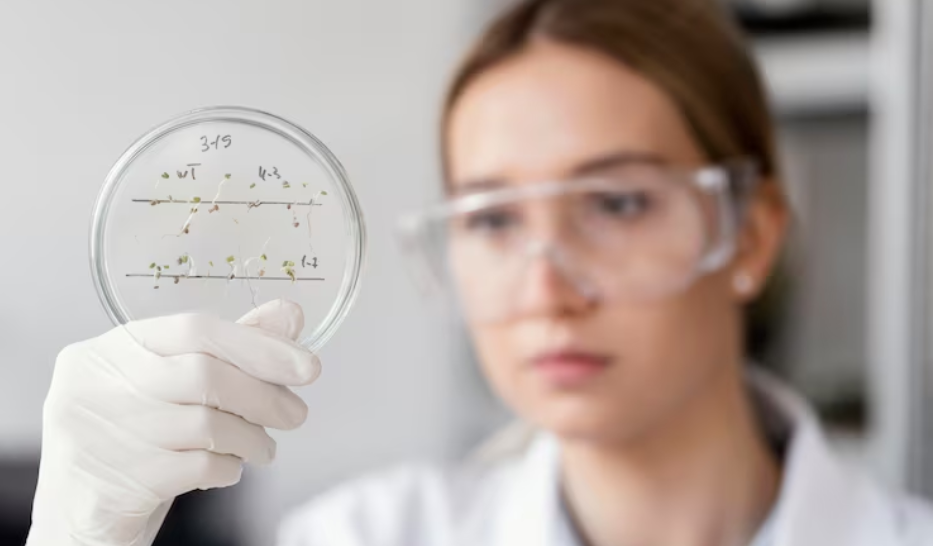
In order to find out whether the cells could correctly separate proteins between the nucleus and the cytosol—a type of internal neatness that diminishes with age—they tested eighty cocktails on senescent and aged human fibroblasts. Six combinations were successful. In less than a week, three of them decreased cellular age by more than three years according to the team’s own gene-activity clock. Crucially, the cells did not develop into stem cells—no NANOG or EPCAM markers—which is significant because unchecked stem-cell behavior is the first step toward cancer.
Speaking with people in the longevity field gives me the impression that there are two very different interpretations of this study. Investors appear to think it’s okay. Biologists who are skeptical tend to be more reserved and cautious. Instead of using animals, the work was done in dishes. How long the rejuvenation lasts after the cocktails are stopped is still unknown. The cells may relocate. They may not. Whether anything seen in a petri dish can withstand contact with a living mouse, much less a human with decades of accumulated damage, is still up for debate.
Sinclair has visited this location previously. His lab demonstrated years ago that NMN, a precursor to the molecule NAD, could reverse some aspects of muscle aging in mice. A different Science paper described the intricate chemistry of how NAD protects PARP1, a DNA-repair protein, from being taken over by DBC1, an obscure molecular troublemaker. The biology is gradually coming together. It’s another matter entirely whether it can be assembled into a bottle and placed on a pharmacy shelf.
As this develops, a recognizable pattern emerges. Years ago, Tesla encountered similar skepticism. Similarly, mRNA vaccines were disregarded for decades until a pandemic made everyone reconsider. A healthy reader should keep this work at a distance until the trials are conducted because aging research has its share of false dawns, such as resveratrol, telomerase, and blood transfusions from young people. However, the direction of travel is clearly visible. One day, the cocktails brewing in Sinclair’s lab might be the cause of the change in how serious scientists discuss aging.
