

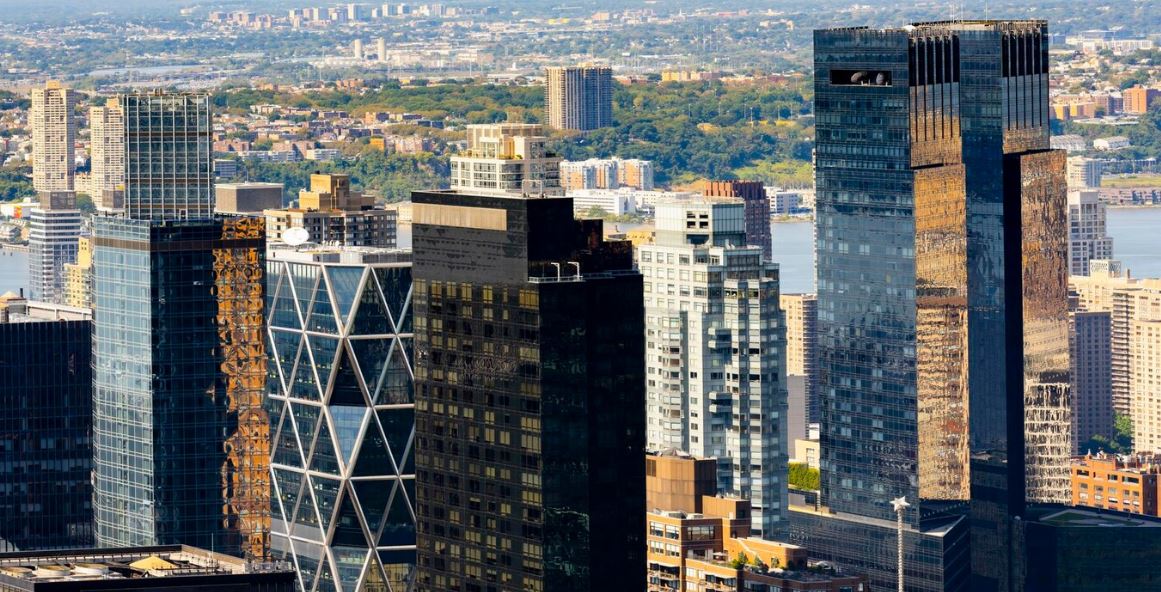
When you walk through the Loop on a Tuesday afternoon, something doesn’t seem quite right. People walk on the sidewalks. There are plenty of people in the coffee shops. However, if you look up at some of those office towers—mostly the older, more basic ones—the empty floors tell a different story. For years, Chicago’s commercial real estate market has been having a hard time. Lenders’ reluctance, remote work, and rising interest rates have all made things worse. There are, however, more and more investors who aren’t running away… They’re walking slowly, quietly, and on purpose toward it.
That is not naive hope. It’s called pattern recognition. In the past, buyers who were willing to move before everyone else saw the recovery get the best deals in distressed markets. Right now, Chicago is stuck in an awkward middle ground—it’s too broken to bring in casual capital, but it’s also not broken enough to be completely abandoned. For some investors, that’s the whole point.
There is no doubt that the numbers have been bad. The number of empty offices in downtown Chicago has been very close to all-time highs. Morgan Stanley analysts predicted that from peak to trough, the prices of commercial real estate across the country would drop by up to 40%. This was mainly due to rising interest rates and the impending wall on refinancing trillions of dollars in commercial mortgage debt.
Most commercial real estate loans come from small and regional banks, but they have pulled back. At the term sheet stage, deals that would have been easy to close in 2019 are ending. It’s possible that some of that pain is still there.
There are, however, signs of stabilization starting to show up. It’s a big bet for Google to turn the James R. Thompson Center into a major office campus in Chicago. It makes a claim. Thousands of workers coming back to one downtown location will create extra demand for food, shops, services, and eventually homes in the area.
As part of the city’s LaSalle Street Reimagined initiative, underperforming office buildings are being turned into mixed-income housing. This reduces the supply of old office space and brings new housing demand to the core at the same time. Neither of these moves is a surefire way to get better. But they make it sound like some of the smarter institutional players still have faith in the city’s bones.
The story in Chicago’s industrial market is very different. The area around O’Hare and Elk Grove is barely able to keep up with demand. A lot of people haven’t been able to touch Class A industrial space near major rail networks and interstate access points during the economic downturn. That difference is important because it shows that “Chicago commercial real estate” isn’t a single thing. There are many sub-markets that are acting very differently from one another, and investors who understand that level of detail are finding opportunities that general pessimism hides.
Multifamily housing has also been surprisingly strong. In Chicago, the demand for apartments in cities has been held back by a lack of housing options and the fact that cities don’t have the same level of neighborhood density or easy access to public transportation as suburbs. Even though office investors have stepped back, that toughness has kept capital coming in. Many people who keep a close eye on this market think that the worst of the multifamily pressure has already passed.
This is a really interesting time because prices for distressed or repositionable assets have finally started to reflect the uncertainty instead of being behind it. This doesn’t happen very often. There were some very good returns for smart investors who got in during the height of fear after the 2008 crisis. These returns lasted for nearly a decade. It’s not a perfect parallel. But it makes sense.
There are still risks. There is still a lot of pressure on the market to refinance. Not every old office building is ready for a Google-style tenant, and projects that adapt the building to new uses are not easy or cheap. Chicago also has some political risk when it comes to taxes and rules, which investors value in different ways depending on how much risk they are willing to take.
Still, it’s hard not to notice that the people talking about Chicago right now aren’t just amateur investors looking for news. They often can tell the difference between a market that’s broken and one that’s just had its prices changed. Chicago looks more like the second one right now.
