

When a corporation is willing to put a year on the impossible, a strange kind of confidence descends upon it. That’s exactly what Colossal Biosciences, a Dallas-based company with over $200 million in investment, has done: without seeming hesitancy, it has declared that a living woolly mammoth hybrid will be on the planet by 2028. It’s the kind of assertion that would be laughed at in any other subject. In synthetic biology, it is becoming more and more profitable.
Colossal’s ideal animal is not a clone. An Asian elephant with about 85 modified genes that have been rearranged to express the shaggy coat, substantial subcutaneous fat, and cold tolerance that formerly enabled mammoths to survive Arctic winters is more like to a reimagining. By using ancient DNA that has been sequenced from specimens that have been kept in Siberian permafrost for thousands of years, scientists are essentially reading a blueprint that nature has long since stopped manufacturing. Depending on your philosophical stance, what they’re constructing from it is either a magnificent provocation or an act of scientific devotion.
The creation of what the team refers to as “woolly mice“—laboratory rodents altered with important mammoth genes that developed thick, golden coats and had faster fat metabolism—was one of the project’s more subtly impressive phases. It sounds like an aside. It isn’t. The kind of proof of concept that advances a project from theory to engineering is the reliable production of cross-species gene expression in a living animal. It appears that investors have taken note.
The real complexity lies in the gestation problem. The closest surviving relative of mammoths, Asian elephants, are endangered and have a 22-month gestation period. Colossal is well aware that it would be morally and practically unacceptable to use living elephants as surrogates. Their solution is to create artificial wombs that can support the growth of elephants. That technology is still in its infancy. Perhaps this is the true race the firm is in against its own deadline, more so than any gene editing obstacle.
Beyond the science, the conservation rationale surrounding the initiative makes it more difficult to reject. According to Colossal, the mammoth is an ecological architect that could gradually restore grassland ecosystems that could halt the thawing of permafrost, knock down trees, and compact snow if it were restored to the Arctic steppe. Pure innovation could never give the idea the utilitarian urgency that the climate perspective does. It seems that the business recognizes the importance of framing as much as genetics.
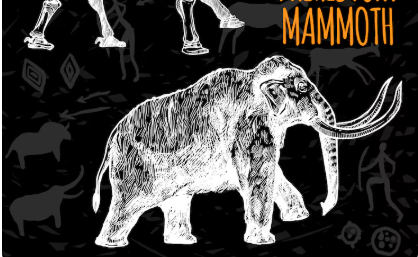
Skepticism still has a lot of room, and some of it is worth clinging to. This kind of de-extinction project has never been finished. Colossal is also pursuing the thylacine and dodo, each of which has unique technical requirements. Looking at the calendar from the outside, it appears that 2028 is both a scientific goal and a declaration of intent, the kind of date that keeps a team and its investors focused on the same future.
It’s actually unknown if the first woolly mammoth hybrid will survive before the end of that year. It seems more difficult to dispute that the biology being created to try, such as multiplex genome editing, artificial wombs, and cold-tolerance genetics, will outlive the deadline and find applications in conservation efforts unrelated to mammoths. Whatever happens in 2028, that may prove to be the more lasting accomplishment.
