
Close Menu
  • Home
  • Banking
  • Celebrities
  • Economy
  • FinTech
  • Industry
  • Markets
Facebook X (Twitter)
Trending
  • Lab-Grown Meat’s Reality Check – Why Billions in Funding Hasn’t Yielded a Cheap Burger.
  • The Ozempic Effect – How GLP-1 Drugs Are Quietly Rewiring the Science of Addiction
  • Nuclear Fusion’s Ignition Point – The MIT Reactor That Just Smashed the Net-Energy Barrier.
  • A National Scandal – Trawlers Scour the Seabeds of Supposedly Protected UK Waters.
  • Oceans Are Absorbing the Earth’s Excess Energy -It’s Disastrous News for Food Systems.
  • A 360-Metre Giant – The World’s Tallest Wind Turbine is Slowly Rising in Germany.
  • Ancient Carbon Venting From Lakes in the Congo Basin Peatlands Spells Trouble for Climate Targets.
  • Dirty Diapers Born Again – Inside Japan’s Mind-Bending Waste Recycling Breakthrough.
Thursday, April 30
PurposedPurposed
Subscribe
  • Home
  • Banking
  • Celebrities
  • Economy
  • FinTech
  • Industry
  • Markets
PurposedPurposed
Home » Ancient Carbon Venting From Lakes in the Congo Basin Peatlands Spells Trouble for Climate Targets.
Uncategorized

Ancient Carbon Venting From Lakes in the Congo Basin Peatlands Spells Trouble for Climate Targets.

Sam AllcockBy Sam AllcockApril 30, 2026No Comments4 Mins Read
Facebook Twitter Pinterest LinkedIn Tumblr Email
‘Ancient’ Carbon Venting From Lakes in the Congo Basin Peatlands Spells Trouble for Climate Targets.
Share
Facebook Twitter LinkedIn Pinterest Email

The swamps in the center of Central Africa were long regarded as a sort of geological savings account. Carbon entered and remained there. The material became older the deeper you dug into the Cuvette Centrale’s peat, and it was assumed that anything that had been buried there for three millennia would respectfully stay buried. Now, that assumption is beginning to seem dubious.

Two sizable lakes in the Democratic Republic of the Congo, Mai Ndombe and Tumba, may be releasing truly ancient carbon, according to research recently published in Nature Geoscience by a team led by Travis Drake at ETH Zurich. Long before the rise of most modern empires, the researchers report that up to 40% of the carbon dioxide drifting off these dark, humic-stained surfaces was sealed inside nearby peatlands. It’s the kind of discovery that, instead of providing an answer, modifies a question.

Topic Snapshot: The Cuvette Centrale Carbon StoryDetails
RegionCentral Congo Basin, Democratic Republic of Congo
Peatland SizeRoughly the size of England
Estimated Carbon StoredAround 30 billion metric tons
Lakes StudiedLake Mai Ndombe and Lake Tumba
Lead Research InstitutionETH Zurich
Lead AuthorTravis Drake
Published InNature Geoscience, February 23, 2026
Share of Lake CO₂ From Ancient PeatUp to 40%
Age of Released CarbonSome deposits over 3,000 years old
Share of Earth’s Land Surface CoveredJust 0.3%
Share of Tropical Peatland Carbon HeldOne-third
Key Driver of RiskLand-use change and drought

The geography of this story has an almost cinematic quality. As you stand at the meeting point of the Fimi and Kasaï rivers, you can witness the collision of two distinct worlds on the water itself: the near-black flow draining out of Mai Ndombe and the rust-red current of the Kasaï. Savanna sediment is the source of the iron-tinted red, while leaves and soils provide the darkness. It’s an oddly lovely place to discover that something is wrong.

The mechanism—or rather, the absence of one—is problematic. Although scientists are able to date the peat upstream and measure the radiocarbon signature of the gas escaping the lakes, the precise route linking the two is still somewhat mysterious. According to co-author Matti Barthel, there is a leak in the reservoir. That metaphor is working hard, but probably not hard enough. A leak suggests that you are aware of the location of the hole.

It’s difficult to ignore how this adds complexity to the larger climate accounting. Every significant carbon budget has identified tropical peatlands as a reasonably reliable sink, and policymakers have relied on this stability when outlining net-zero pathways. Some of those figures were subtly counting the same molecules in the wrong column if a significant portion of the CO2 exiting Congo’s blackwater lakes turns out to be millennia-old peat carbon rather than recently fallen leaves.
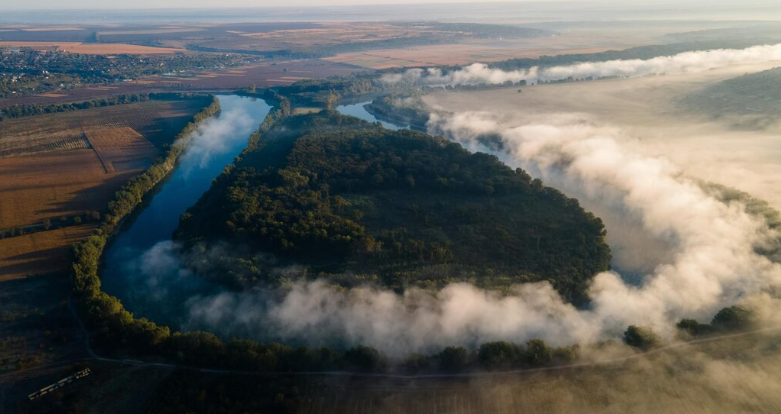
‘Ancient’ Carbon Venting From Lakes in the Congo Basin Peatlands Spells Trouble for Climate Targets.

The factors that humans can control and those that they cannot determine whether this trend gets worse. Deforestation, cropland conversion, and drought all push the basin closer to releasing its stored resources. For years, Amazon has had to deal with its own version of this discussion. The peat fires in Southeast Asia presented an even more direct argument. Due in part to the fact that the central basin is actually difficult to access, Africa has contributed less to the conversation. The primary research instruments are still patience and pirogues.

Reading the study gives us the impression that we should have looked at this earlier. Only around ten years ago was the Cuvette Centrale properly mapped. We are still in the early stages of comprehending how this region, which contains one-third of the carbon in tropical peatlands worldwide, breathes. In the grand scheme of things, the leak might be minor. It might not be, too.

For the time being, the lakes continue to exhale slow, ancient breath into a warming sky, as they seem to have been doing for a while. Somehow, that breath will need to be accommodated in the climate targets written in air-conditioned conference rooms in Geneva and New York. Unconcerned, the peat continues to release what it once held.

‘Ancient’ Carbon Venting From Lakes
Share. Facebook Twitter Pinterest LinkedIn Tumblr Email
Sam Allcock
  • Website

Sam Allcock is a journalist, digital entrepreneur, and media strategist with a passion for purpose-driven storytelling. With over a decade of experience in the media landscape, Sam has built a reputation for creating impactful narratives that bridge the gap between innovation, integrity, and social responsibility. As the founder of multiple digital ventures, Sam understands the power of strategic communication in shaping public discourse. His work explores how technology, entrepreneurship, and ethical leadership intersect to create meaningful change. On Purposed.org.uk, Sam contributes thought-provoking articles that challenge conventional thinking and advocate for a more conscious approach to business and media. Beyond his writing, Sam actively supports initiatives that promote transparency, trust, and long-term value in both corporate and community settings. His insights are grounded in a belief that purpose is not just a trend, but a transformative force in today's world.

Related Posts

A National Scandal – Trawlers Scour the Seabeds of Supposedly Protected UK Waters.

April 30, 2026

A 360-Metre Giant – The World’s Tallest Wind Turbine is Slowly Rising in Germany.

April 30, 2026

Oceans Are Darkening All Over the Planet—What’s Going On in the Deep Blue?

April 30, 2026
Leave A Reply Cancel Reply

Latest Posts

Lab-Grown Meat’s Reality Check – Why Billions in Funding Hasn’t Yielded a Cheap Burger.

April 30, 2026

The Ozempic Effect – How GLP-1 Drugs Are Quietly Rewiring the Science of Addiction

April 30, 2026

Nuclear Fusion’s Ignition Point – The MIT Reactor That Just Smashed the Net-Energy Barrier.

April 30, 2026

A National Scandal – Trawlers Scour the Seabeds of Supposedly Protected UK Waters.

April 30, 2026
Don't Miss
Industry

Lab-Grown Meat’s Reality Check – Why Billions in Funding Hasn’t Yielded a Cheap Burger.

By Sam AllcockApril 30, 2026

More than ten years have passed since Mark Post watched a food critic chew the…

The Ozempic Effect – How GLP-1 Drugs Are Quietly Rewiring the Science of Addiction

April 30, 2026

Nuclear Fusion’s Ignition Point – The MIT Reactor That Just Smashed the Net-Energy Barrier.

April 30, 2026

A National Scandal – Trawlers Scour the Seabeds of Supposedly Protected UK Waters.

April 30, 2026
About
About

Stay informed with Purposed – your source for reliable news and expert insights. Explore our site for the latest stories and updates.

Email: editor@purposed.org.uk
Email: advertise@purposed.org.uk

Our Picks

Arsène Wenger’s Girlfriend: Who Is the Mystery Woman Spotted With Him in Mykonos?

May 25, 2025

From Gamers to Fashion Icons: The Rise of E-Sports and Celebrity Collaborations

December 9, 2025

Alexandr Wang Parents, The Immigrant Physicists Behind Silicon Valley’s Youngest Billionaire

July 9, 2025
Most Popular

Lab-Grown Meat’s Reality Check – Why Billions in Funding Hasn’t Yielded a Cheap Burger.

April 30, 2026

The Ozempic Effect – How GLP-1 Drugs Are Quietly Rewiring the Science of Addiction

April 30, 2026

Nuclear Fusion’s Ignition Point – The MIT Reactor That Just Smashed the Net-Energy Barrier.

April 30, 2026
© 2026 purposed.org.uk
  • About Us
  • Contact Us
  • Meet the Purposed Tean
  • Privacy Policy
  • Terms and Conditions

Type above and press Enter to search. Press Esc to cancel.