

There are about fifty whales in a deep water area between 150 and 410 meters off the coast of western Florida in the northern Gulf of Mexico. They spend their whole lives in this one location. They don’t move. They became critically endangered by most standards before most people had ever heard of them, and they were not formally recognized as a separate species until 2021. They are named for the biologist Dale Rice, who made the initial identification.
A group of six high-ranking US government officials unanimously decided on March 31, 2026, to remove the final regulatory safeguards separating those whales from the business that operates in their sole habitat. Because it has the authority to determine which species survive and which are sacrificed for other purposes, the committee is known as the “God Squad.”
| Category | Detail |
|---|---|
| Species | Rice’s whale (Balaenoptera ricei) — only whale species endemic to the Gulf of Mexico; formally identified as a distinct species in 2021; named after biologist Dale Rice |
| Estimated Population | Approximately 50–51 individuals remaining — making it one of the rarest marine mammals on Earth; population declined by up to 22% as a direct result of the 2010 BP Deepwater Horizon oil spill |
| “God Squad” Vote — March 31, 2026 | The Endangered Species Committee — a panel of senior federal officials — voted unanimously to exempt oil and gas drilling in the Gulf from ESA requirements; triggered by Defense Secretary Hegseth citing “national security” |
| Industry Lobbying Documented | Chevron, ExxonMobil, and Occidental Petroleum spent more than $8 million since October 2025 lobbying the government specifically regarding the Endangered Species Act, permitting reform, and Rice’s whales — per NPR lobbying reports |
| Primary Threats to Species | Vessel strikes (whales rest near the surface at night); seismic air gun surveys disrupting communication and feeding; oil spills; habitat destruction from expanded drilling in critical habitat zones |
| May 2025 Biological Opinion | The Trump administration’s own environmental assessment found oil and gas vessel strikes “likely to jeopardize the existence” of the Rice’s whale — the same administration later exempted the industry from ESA protections |
| Extinction Risk Projection | Scientists project that a population of 35 Rice’s whales would take 68 years to recover to 500 individuals — a timeframe in which any single catastrophic event, like an oil spill, could trigger irreversible collapse |
| Further Reference | Environmental and legal analysis at NPR and Earthjustice |
In this instance, the something else is gas and oil. For years, energy corporations in the Gulf have resisted Endangered Species Act regulations on their operations, claiming that habitat protections and speed limits create “regulatory uncertainty” that hinders drilling planning. Since October 2025, Chevron, ExxonMobil, and Occidental Petroleum have spent over $8 million lobbying the federal government on the ESA, permitting reform, and, especially, Rice’s whales.
It’s important to take your time reading this disclosure. Eight million dollars was spent by three large oil firms in an attempt to take safeguards away from a species that only has fifty individuals remaining. The documentation is there. The vote took place. As the saying goes, the receipts are recorded.
The government’s own science came to the same conclusion as the environmental organizations opposing the exemption, which is what makes this specific instance so striking. In May 2025, the Trump administration released a biological opinion stating that attacks by oil and gas vessels in the Gulf were “likely to jeopardize the existence” of the Rice’s whale. After a federal judge determined that the prior study had not sufficiently addressed the dangers from oil spills and collisions, the administration developed its own report in response to a court order.
After reviewing the facts, the government declared that the industry was endangering the whales. The industry was then released from the legal requirements intended to counter that threat 10 months later. The national security justification for the vote was supplied by Defense Secretary Pete Hegseth. He addressed the committee, saying, “We need a steady, affordable supply of our own energy to be secure as a nation.” That text did not specifically address the 50 whales.
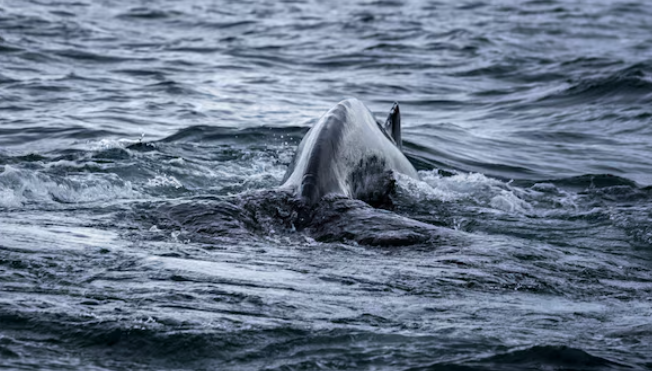
The Rice’s whale inhabits an area that is extremely susceptible to exploitation by human activity. At night, it lies close to the surface in shipping routes and the waterways that supply ships use to service offshore rigs. Oil firms monitor the bottom using seismic air cannon surveys, which produce bursts loud enough to interfere with feeding and communication over hundreds of miles.
Approximately one-fifth of the world’s population perished in the 2010 Deepwater Horizon leak, for which BP paid $65 billion in fines and settlements. Scientists studying the species have noted that the population is so small that it may already be in what they call an extinction vortex — a feedback loop in which reduced numbers slow reproduction, making the remaining individuals increasingly vulnerable to any single catastrophic event, making recovery harder with each year that passes.
The God Squad’s power was succinctly summarized by Pat Parenteau, an emeritus professor at Vermont Law School who contributed to the ESA’s exemption clause: “It literally has the power of life or death.” The committee had not used that authority in decades until the exception vote.
It’s possible that the Rice’s whale will survive despite the removal of its protections — that the industry will voluntarily maintain speed restrictions, that no major spill occurs in the next critical decade, that the population somehow finds a way to stabilise. It’s also possible that the historical record, when it is eventually written, will be specific about what happened: a species with a population of fifty animals, a committee of six officials, and a documented lobbying campaign costing eight million dollars to arrive at this outcome.
