

A wind turbine rotates consistently in the wind that has been blowing since the early morning on a sunny afternoon in northern Germany. The turbine is operating. The laws of physics are in effect. There is actual, quantifiable electricity being produced. However, there is a transmission line that is already carrying as much current as it can safely carry somewhere between that revolving blade and the houses forty kilometers away whose occupants would gladly welcome the power, and the electricity has nowhere to go.
Because the infrastructure connecting production and consumption was created for a previous age and has not kept up with what Europe has built on top of it, it will be limited—switched off, throttled back, or wasted into the earth. The story of the European electricity system in 2026 can be summarized as follows.
| Category | Detail |
|---|---|
| Projects Stuck in Connection Queues | Over 1,700 GW of renewable energy projects waiting for grid connection across 16 European countries — approximately three times the capacity required to meet 2030 clean energy targets |
| Energy Wasted in 2024 | Approximately €7.2 billion in renewable energy was wasted across just seven countries because the grid could not absorb or transmit the generated power |
| Worst-Affected Countries (Constraints) | Austria, Bulgaria, Latvia, the Netherlands, Poland, Portugal, Romania, and Slovakia experiencing the most severe grid capacity constraints relative to renewable project demand |
| Largest Queue Volumes | The UK, Finland, Italy, and Germany have the highest absolute volume of projects waiting in the connection queue — reflecting the scale of renewable investment in those markets |
| Household Impact | Nearly 1.5 million households across Europe may face delays in connecting rooftop solar installations due to limited local grid capacity |
| Root Cause | Europe’s transmission and distribution grids were designed for centralised, large fossil fuel generation — not the distributed, variable output of solar and wind at scale |
| Investment Gap | Grid investment has increased by 50% over five years but remains well below what independent analysts say is required; permitting processes for new infrastructure can take a decade or more in some member states |
| Further Reference | Grid modernisation analysis at IEA: Electricity Grids and Secure Energy Transitions |
In sixteen European nations, there are now more than 1,700 gigawatts of renewable energy projects sitting in connection lineups. To put that figure into perspective, it is about three times the amount of clean energy that Europe will require to reach its 2030 goals. Additionally, it is energy that exists on paper, has drawn funding, and is frequently partially constructed (turbines completed, solar panels attached), sitting idle since the grid is unable to handle the power they generate.
Because the infrastructure was unable to transport or absorb the energy produced by the generators, almost €7.2 billion worth of renewable energy was squandered in just seven nations in 2024. The funds were used. There was no displacement of carbon. Both of those statements are true at the same time, and the difference between them represents a structural failure that is expanding rather than contracting.
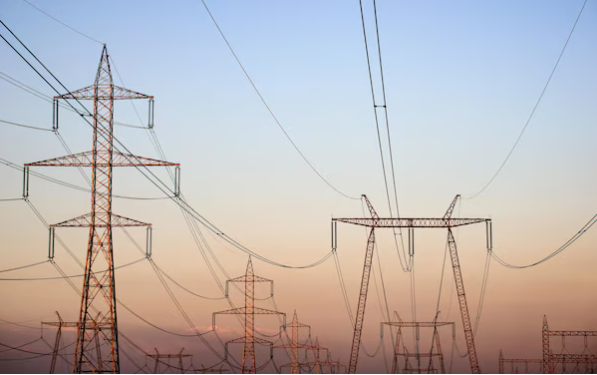
It is easy to identify the underlying cause of the issue, but it can be challenging to resolve. The transmission and distribution networks in Europe were designed for a future in which massive coal and gas plants would sit in fixed positions, produce electricity according to a set timetable, and send it in a single path to passive customers. Solar and wind power operate in various ways. They are dispersed geographically, have variable output, and are becoming more two-way as homes with rooftop panels both feed into and consume from the grid.
Transformers, substations, and switching equipment—hardware that controls power flow—were not made for this, and adapting it is neither quick nor inexpensive. With curtailment costs in the billions of euros per year as the nation pays generators to turn off transmission lines rather than overload them, Germany, which has made more aggressive investments in renewable capacity than most, has also developed some of the most obvious grid congestion issues.
Romania and Poland, for example, are dealing with a similar but distinct form of the same pressure. Their investment levels are lower, their grids are older, and the renewable energy surge has arrived before the infrastructure discourse has advanced to the point where it can be absorbed. There are significant backlogs in connections in Bulgaria and Latvia, which might cause projects to be delayed by ten years or longer.
In the meantime, the 1.5 million households in Europe who are waiting to connect rooftop solar installations are facing a technical and bureaucratic reality that is rarely acknowledged in the marketing of the energy transition: the local distribution network, or the last mile of the grid, is frequently the most constrained and receives the least attention and investment.
Europe has seen a roughly 50% rise in grid investment over the last five years, which seems significant until you consider what independent energy analysts claim is actually required. The amount of transmission and distribution investment needed to meet the expected speed of renewable deployment is two to three times the current trend, according to the International Energy Agency and other organizations. In some EU member states, the permitting process for new high-voltage lines can take ten years or longer.
As a result, the political and regulatory settings from long before the present energy crisis are reflected in the infrastructure decisions being made today. Analyzing the data gives the impression that Europe has effectively constructed a generation system for the future while failing to construct the network necessary to transport its output. The wind continues to blow. The turbine continues to rotate. In between, an outdated transformer silently alerts the system that it has reached its limit.
