

In July 2025, a team of environmental monitors directed an optical gas imaging camera at a certified gas production facility in the Permian Basin, a region of West Texas scrubland where the horizon is flat in all directions and the heat is tangible. Nothing remarkable was visible to the unaided eye.
The camera, which picks up otherwise undetectable methane, showed a plume rising from the location in volume and consistency that investigators later reported as “terrible pollution.” The London-based NGO MiQ, whose certification is used by businesses like BP and ExxonMobil to show European consumers that their gas satisfies low-methane regulations, awarded the location in question a Grade A rating. The grade was up to date. There was a big plume. At the same time, both were true.
| Category | Detail |
|---|---|
| Certification Program | MiQ (Methane Intelligence) — London-based non-profit; grades gas production facilities from A to F based on methane intensity; covers approximately 20% of US natural gas production and 7% globally |
| The Investigation | Guardian/Drilled investigation published April 1, 2026; field surveys conducted by Gas Outlook and Oilfield Witness in July 2025 at 10 MiQ-certified sites across the Permian Basin, Texas–New Mexico border |
| Method Used by Investigators | Optical gas imaging (OGI) cameras that detect methane invisible to the naked eye; used alongside aerial surveys; same technology used in leak detection and repair programs at certified facilities |
| Key Finding | Multiple sites rated Grade A — the highest designation for low methane intensity — were found emitting significant, previously undetected methane plumes described by investigators as “terrible pollution” |
| Industry Users of MiQ Certification | BP, ExxonMobil, and EQT are among the companies that use MiQ certification to demonstrate compliance with the EU Methane Regulation (EUMR) for imported LNG sold into European markets |
| EU Regulatory Context | The EU Methane Regulation creates import requirements that LNG suppliers may meet through voluntary certification; the American Petroleum Institute has stated a 2026 goal to “ensure” EU methane laws do not “disadvantage US producers” |
| Climate Impact | Methane is approximately 86 times more potent than CO₂ as a greenhouse gas over a 20-year period — making large, undetected leaks disproportionately impactful for near-term climate targets |
| Further Reference | Methane and climate data at US EPA Greenhouse Gas Emissions and the Guardian’s investigation |
A Guardian and Drilled investigation released on April 1, 2026, examines this conflict between a certification system intended to render natural gas reliably “clean” and field surveys indicating the system’s measurements are missing significant real-world emissions. In collaboration with Oilfield Witness, the reporters used the same class of optical gas imaging technology that certified facilities are supposed to use to inspect ten MiQ-certified sites around the Permian Basin.
They discovered substantial methane plumes at several Grade A locations, which the certification procedure had obviously missed, rather than little underperformance. The investigation raises a more difficult and systemic question: whether voluntary certification schemes are structurally incapable of detecting the emissions they are supposed to measure, regardless of the intentions of the people running them. However, it does not characterize the failures as intentional deception by the certification body.
Methane intensity, or the ratio of methane emissions to total gas generated, is the basis for MiQ’s annual grading of production facilities. An A grade necessitates the lowest intensity band and a quarterly monitoring program employing detection technologies with predetermined performance benchmarks.
The research reveals a discrepancy between what a facility exhibits during an audit period and what it emits over the remainder of the year, in circumstances that auditors would not notice, rather than necessarily with those criteria. Methane leaks are frequently sporadic and might be caused by a broken valve, a pressurized discharge, or equipment that functions differently than it does during an evaluation. A one-year certification that is evaluated at one point in time might not accurately reflect the facility’s yearly emissions profile.
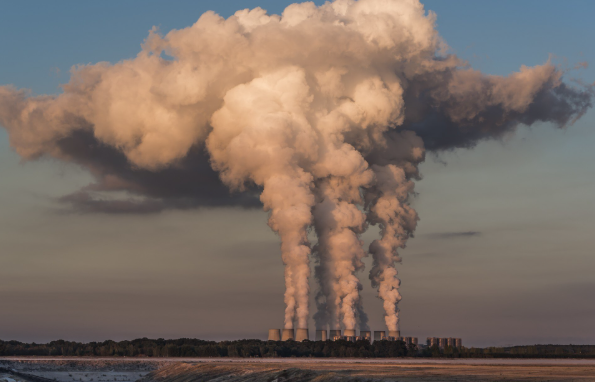
The story’s policy weight comes from its European component. US gas producers have a financial incentive to demonstrate low methane intensity due to the EU Methane Regulation’s import requirements for LNG sold into European markets; optional certification like MiQ’s Grade A is positioned to meet those requirements.
The American Petroleum Institute stated clearly in its 2026 lobbying priorities that it wants to make sure EU methane regulations do not “disadvantage US producers,” a framing that implies the industry views the certification pathway as a way to keep market access rather than just as a tool for environmental improvement. Additionally, the EU has being pressured by the advocacy group FuelsEurope to accept certificates that are “transferred independently from the underlying commodity”—that is, the clean credential may be transported apart from the actual gas it is meant to describe.
Reading through the investigation’s conclusions and the regulatory framework surrounding them gives the impression that the certification system was created to address one issue—giving buyers some differentiation between producers—but is now being asked to fulfill the evidentiary requirements of a legal import framework.
It’s still uncertain how voluntary, third-party certification can satisfy that much higher standard in practical settings. According to MiQ, its framework is made to adhere to EU regulations. The Permian Basin plumes imply that performance and design are not always synonymous. The certificate’s grade has no bearing on the invisible gas.
