
Close Menu
  • Home
  • Banking
  • Celebrities
  • Economy
  • FinTech
  • Industry
  • Markets
Facebook X (Twitter)
Trending
  • How a Rogue Botanist Discovered a Plant That Could Replace Synthetic Plastics Forever
  • How Persuasive Design is Engineering the Next Generation of Teenage Pop Idols
  • Sydney’s Burgeoning Indie Scene is Officially Eclipsing Hollywood’s Manufactured Pop
  • Why British Period Dramas Are Suddenly Leaning Hard Into Sci-Fi Horror
  • How a Mistranslated Meme Sparked a Genuine Diplomatic Incident Between the U.S. and France
  • The Death of the ‘It Girl’, How the Internet Fragmented Celebrity Culture Forever
  • Harry Kewell Net Worth: From Leeds United to Global Football Management and $20–50 Million in Career Earnings
  • Sheree Murphy Net Worth Explained: From Tricia Dingle to a Multi-Million Pound Career
Monday, August 3
PurposedPurposed
Subscribe
  • Home
  • Banking
  • Celebrities
  • Economy
  • FinTech
  • Industry
  • Markets
PurposedPurposed
Home » How a Rogue Botanist Discovered a Plant That Could Replace Synthetic Plastics Forever
Uncategorized

How a Rogue Botanist Discovered a Plant That Could Replace Synthetic Plastics Forever

Sam AllcockBy Sam AllcockAugust 3, 2026No Comments4 Mins Read
Facebook Twitter Pinterest LinkedIn Tumblr Email
How a Rogue Botanist Discovered a Plant That Could Replace Synthetic Plastics Forever
Share
Facebook Twitter LinkedIn Pinterest Email

For more than a century, the water hyacinth has been among the world’s most damaging plants. In tropical and subtropical lakes and streams, it grows in thick, tangled mats that prevent sunlight from reaching underwater habitats, deplete oxygen, kill fish, obstruct boats, and ruin the lives of fishing people in South America, Asia, and Africa. It spreads quickly. It is almost tough to get rid of. Additionally, Joseph Nguthiru, a young businessman in Kenya, made the decision to gather it and use it to make packaging.

Nguthiru founded Hiopac, a company that extracts cellulose from water hyacinth that was taken straight from Kenyan lakes where it was harming the environment. After that, the cellulose is processed into a packaging material that, for practical purposes, works like regular plastic—it holds objects, doesn’t dissolve in the rain, and can take on various shapes—but, after being disposed of, returns to the earth a few months later. The petroleum product that was contaminating the ocean is replaced by the plant that was damaging the lake. The chemistry is true, but the environmental reasoning is so tight that it sounds too tidy.

The second story is about a cactus and takes place in Mexico. Using the juice of the prickly pear cactus, or nopal, which has been a mainstay of Mexican agriculture and gastronomy for hundreds of years, Sandra Pascoe Ortiz, a chemical engineer at the Universidad del Valle de Atemajac in Guadalajara, created a biodegradable plastic substitute. During its useful life, her material behaves convincingly like traditional plastic, yet it dissolves in water in a matter of days and breaks down in soil in approximately a month. Additionally, it is so non-toxic that it is safe for animals to eat in the event that they unintentionally consume it. Part of what makes the material noteworthy is that it was created without significant corporate support; rather than coming from a well-funded industrial research program, it came from a researcher working on an issue she thought was worthwhile.

The third breakthrough, which took place in Japan in 2025, is the most technically ambitious. From regular wood-pulp cellulose, a group at RIKEN’s Center for Emergent Matter Science under the direction of Takuzo Aida created what they refer to as a supramolecular plastic. In a variety of applications, the material can serve as a true substitute for synthetic plastics due to its strength, flexibility, and processability. It entirely dissolves in seawater within hours of reaching the ocean, whether through marine disposal or littering that ends up in waterways. No pieces. Not a single microplastic. No residue could be found using the analytical techniques currently in use. By engineering the material’s structure so that seawater causes total breakdown instead of the gradual fragmentation that traditional plastics go through over decades, the RIKEN team’s method operates at the molecular architecture level.

The global plastics problem is too big and structural to be solved by a single material substitution, so all three scenarios don’t address it on their own. The annual production of conventional plastics is calculated in hundreds of millions of tons. Currently, less than 2% of the market is made up of bioplastics. None of these materials have yet fully attained the manufacturing infrastructure, supply chain investment, regulatory frameworks, and price competitiveness necessary to go from that two percent to something that actually replaces petroleum-based plastics at scale. It takes time to bridge the gap between laboratory proof of concept and industrial deployment.
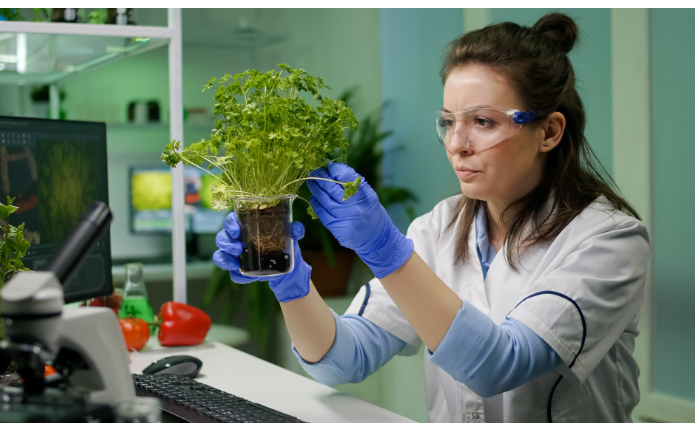
How a Rogue Botanist Discovered a Plant That Could Replace Synthetic Plastics Forever

When comparing these three innovations—an invasive plant from Kenyan lakes, a cactus from Mexican agriculture, and wood pulp from a Japanese research institute—it’s important to note how different their origins are. Finding a novel or uncommon organism was not necessary for any of them. One of them begins with a material that has been manufactured industrially for decades, while the other two begin with plants that are already plentiful in their particular surroundings. Finding anything novel in the forest is not the innovation. It involves taking a different approach to what currently exists, including items that were previously classified as problems rather than resources.

Replace Synthetic Plastics Rogue Botanist
Share. Facebook Twitter Pinterest LinkedIn Tumblr Email
Sam Allcock
  • Website

Sam Allcock is a journalist, digital entrepreneur, and media strategist with a passion for purpose-driven storytelling. With over a decade of experience in the media landscape, Sam has built a reputation for creating impactful narratives that bridge the gap between innovation, integrity, and social responsibility. As the founder of multiple digital ventures, Sam understands the power of strategic communication in shaping public discourse. His work explores how technology, entrepreneurship, and ethical leadership intersect to create meaningful change. On Purposed.org.uk, Sam contributes thought-provoking articles that challenge conventional thinking and advocate for a more conscious approach to business and media. Beyond his writing, Sam actively supports initiatives that promote transparency, trust, and long-term value in both corporate and community settings. His insights are grounded in a belief that purpose is not just a trend, but a transformative force in today's world.

Related Posts

How a Mistranslated Meme Sparked a Genuine Diplomatic Incident Between the U.S. and France

August 3, 2026

Lindsey Graham Lost Both Parents Before He Turned 23 — Here’s What Actually Happened

July 31, 2026

The Mathematical Equation That Proves We Are Likely Living in a Simulation—And Who Found It

July 29, 2026
Leave A Reply Cancel Reply

Latest Posts

How a Rogue Botanist Discovered a Plant That Could Replace Synthetic Plastics Forever

August 3, 2026

How Persuasive Design is Engineering the Next Generation of Teenage Pop Idols

August 3, 2026

Sydney’s Burgeoning Indie Scene is Officially Eclipsing Hollywood’s Manufactured Pop

August 3, 2026

Why British Period Dramas Are Suddenly Leaning Hard Into Sci-Fi Horror

August 3, 2026
Don't Miss
Uncategorized

How a Rogue Botanist Discovered a Plant That Could Replace Synthetic Plastics Forever

By Sam AllcockAugust 3, 2026

For more than a century, the water hyacinth has been among the world’s most damaging…

How Persuasive Design is Engineering the Next Generation of Teenage Pop Idols

August 3, 2026

Sydney’s Burgeoning Indie Scene is Officially Eclipsing Hollywood’s Manufactured Pop

August 3, 2026

Why British Period Dramas Are Suddenly Leaning Hard Into Sci-Fi Horror

August 3, 2026
About
About

Stay informed with Purposed – your source for reliable news and expert insights. Explore our site for the latest stories and updates.

Email: editor@purposed.org.uk
Email: advertise@purposed.org.uk

Our Picks

Why Reality TV Villains Are Suddenly Rebranding as High-Paid Corporate Consultants

July 27, 2026

Chloë Grace Moretz Girlfriend: Meet Kate Harrison, the Woman Who Stole Her Heart

March 20, 2025

The Toxic Positivity of LinkedIn: Why the Professional Network is Making Everyone Miserable.

April 3, 2026
Most Popular

How a Rogue Botanist Discovered a Plant That Could Replace Synthetic Plastics Forever

August 3, 2026

How Persuasive Design is Engineering the Next Generation of Teenage Pop Idols

August 3, 2026

Sydney’s Burgeoning Indie Scene is Officially Eclipsing Hollywood’s Manufactured Pop

August 3, 2026
© 2026 purposed.org.uk
  • About Us
  • Contact Us
  • Meet the Purposed Tean
  • Privacy Policy
  • Terms and Conditions

Type above and press Enter to search. Press Esc to cancel.