

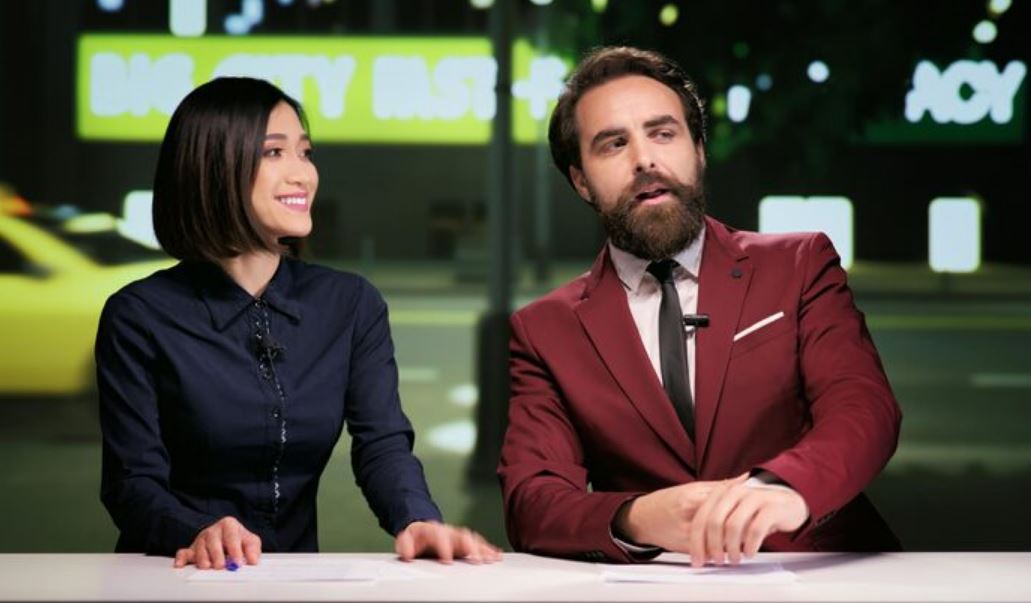
People used to think that getting on Letterman or Leno was like pulling off something very close to magic. With the right couch look, a movie could make it through its first weekend. The studios knew it. It was what publicists expected. The guest would walk out, sit down, and say something cute, which made millions of people at home think of something fun to do over the weekend. It was a machine that worked amazingly well for decades.
That machine is going slow and might even stop for good. When Stephen Colbert’s Late Show was canceled last month, it caused a noticeable shaking in the business. It was felt by every late-night host still on the air. The show was a reliable institution; it was a mix of political satire and celebrity access, and publicists knew they could book their clients on it and be sure they would have a good audience. Not only did losing it leave a hole in the programming, but it also showed something about the ecosystem that many people had been avoiding.
Late-night TV has been losing viewers for years, and the marketing logic that kept it at the center of Hollywood’s movie release plans is slowly falling apart. There are still famous people there, of course. Most of the time, though, when they do, it’s not for as many people as people thought it would be ten years ago. Some daytime shows have been taken off the air because of sky-high production costs and falling ratings, and the same economic pressure is slowly spreading to late night.
It’s not interesting to know if late night is having trouble. That’s for sure. Where did everyone go? That’s the more interesting question.
Surprisingly much of the energy went to podcasts. If you time your interview with a popular host well, like Alex Cooper or Conan O’Brien on his audio-first show, you can reach a very interested audience that went out of their way to find it. That kind of attention is different from the rest. A passive audience member is someone who changes channels and ends up on a talk show. Someone who downloaded an episode of a podcast is a completely different thing. This is now being taken into account by studios and labels, though they still don’t fully understand how to measure it.
Another layer was added by YouTube and social networks. Now that stars have their own channels, they can talk directly to fans without going through the usual system of gatekeepers. There’s something interesting about that change: for a long time, the late-night show was the entry point. The host handled the celebrity’s image, asked the silly questions that were written ahead of time, and let the clip go viral. Now, actors and artists can make that moment happen and share it without getting permission from a network.
Even so, it’s still not clear if any of these options can fully replace late night. A Letterman appearance wasn’t just a way to promote something; it was also a form of cultural validation. People could tell that a project was important because it had its own time slot. Podcasts can show that something is important, but they don’t yet have the same cultural weight as books.
When you talk to people in the publicity world, you get the sense that the promotional playbook is being changed all the time, almost season by season. So far, no one has locked in a new model. There are publicists who focus more on digital. Others try to get on UK talk shows, where people are more likely to be friendly and the interviews tend to be more open. It’s not a whole.
There won’t be no more late-night talk shows right away. But its hold on promoting celebrities has loosened a lot, and the studios, labels, and networks that relied on it are still getting used to a world where things aren’t always what they seem to be. There will be better options for some. Some have already done it. And the hosts who are still on air have to work with a format that used to feel certain.
