

Venus’s surface does not tolerate engineering presumptions. The planet has destroyed every lander ever sent to it. Its temperature is about 465 degrees Celsius, its atmospheric pressure is ninety times that of Earth at sea level, and there are clouds of sulfuric acid someplace above. The Venera series of Soviet probes from the 1970s and 1980s managed to send data from the Venusian surface for between 23 and 2 hours before going silent.
This is still the only vessel that has ever done so. The instruments were functional. In the end, the heat prevailed. The cameras, sensors, or communication equipment were not the particular issue. Ultimately, it was the electronics. At about 200 degrees Celsius, silicon breaks down. Venus is more than double that much. Now, a group at the University of Southern California has created a device that can run at 700 degrees without stopping.
| Category | Detail |
|---|---|
| Research Institution | USC Viterbi School of Engineering — research led by Professor Joshua Yang; first author Jian Zhao; published in the journal Science on March 26, 2026 |
| Device Type | Memristor — a nanoscale component that can both store data and perform computing operations; non-volatile (retains data without power) |
| Operating Temperature | Reliably operated at 700°C (1,292°F) — well above the ~465°C surface temperature of Venus; conventional silicon electronics fail at approximately 200°C |
| Material Composition | “Sandwich” structure: tungsten top electrode (highest melting point of any element) + hafnium oxide ceramic switching layer + graphene base (a single-atom-thick carbon sheet) |
| Performance Metrics | Retained data for over 50 hours at 700°C; survived more than 1 billion switching cycles; operated at approximately 1.5 volts with response times of tens of nanoseconds |
| Why Graphene Is the Key | In previous designs using platinum, tungsten atoms drift and accumulate, causing permanent short circuits; graphene provides an unstable binding surface for tungsten atoms, preventing migration and failure |
| How Discovery Was Made | “By accident, as most discoveries are” — Yang’s team was attempting to build an entirely different device when they found graphene’s unusual thermal properties at the tungsten interface |
| Further Reference | Space mission context at Universe Today and EurekAlert |
On March 26, 2026, researchers at the Viterbi School of Engineering under the direction of Professor Joshua Yang published the gadget, a memristor, in the journal Science. Physically speaking, it is a small sandwich consisting of a base layer of graphene, a sheet of carbon that is precisely one atom thick, a ceramic switching layer made of hafnium oxide in the center, and a tungsten top electrode. Each of those materials is capable of withstanding high temperatures on its own.
It turns out that the combination protects the device from self-destructing, something that none of the earlier methods for high-temperature memory had been able to accomplish. Tungsten atoms from the top electrode in earlier designs with platinum as the base layer travel downhill at high temperatures, build up on the platinum surface, and create conductive bridges that permanently lock the device into a single state, eliminating its usefulness as a memory component. None of the failure mechanism was visible in the graphene version. Graphene is an extremely hostile landing surface for tungsten atoms, which remain where they belong.
The performance numbers are what make this more than a laboratory curiosity. At 700 degrees Celsius, the device stored data for more than 50 hours. It survived more than one billion switching cycles. Despite the extremely hot environment, it was competitive with conventional memory, operating at about 1.5 volts and responding in tens of nanoseconds. By mapping precisely what was happening at the atomic interface between graphene and tungsten using electron microscopy, spectroscopy, and quantum-level computer simulations, the researchers transformed their unintentional discovery into a mechanistic insight that could be generalized.
“By accident, as most discoveries are,” Yang explained, describing how they happened onto it. In a sector where research publications typically describe discoveries as the inevitable outcome of meticulous inquiry, this admission of luck is noteworthy. The transparency is helpful because it makes clear what the team really accomplished—not just the gadget but also the rationale behind its operation, which makes it easier to identify additional materials with comparable qualities.
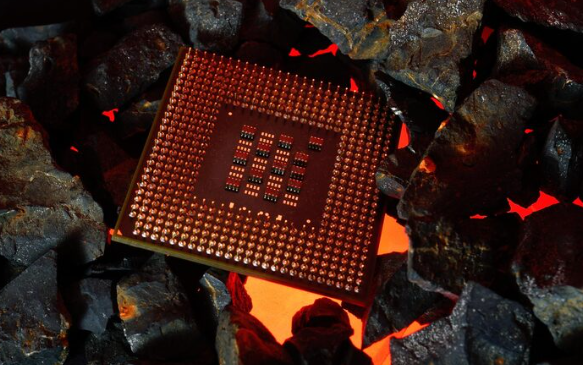
For obvious reasons, the Venus application is the most popular. For years, space agencies have been requesting electronics that can function at temperatures higher than 500 degrees Celsius because they understand that any significant surface research on Venus necessitates sensors that can endure longer than a few hours.
When a chip functions steadily at 700 degrees, it surpasses that barrier by a significant amount, and according to Yang, the team believes the real limit is even higher. With this class of electronics, the current Venera record of two hours could be extended to days or weeks, enabling surface instruments to collect the kind of continuous data that could ultimately provide answers to fundamental geological and atmospheric questions that have never been addressed because we have never had anything that could stay long enough to do so.
Even though they are less spectacular to explain, the applications beneath the surface are just as fascinating. Nuclear and fusion energy system controls, geothermal drilling sensors, and jet engine monitoring systems all function in situations where traditional electronics need complex cooling infrastructure or are unable to live.
In each of those situations, a memory component that operates dependably at high temperatures without cooling lowers weight, complexity, and expense. Given the development timescales associated with planetary exploration, it is feasible that the terrestrial uses for this technology will be available before the Venus expeditions. However, at temperatures that would melt most metals, seeing a graphene sheet one atom thick maintain tungsten atoms exactly where they belong feels more like a limitation being lifted than a technological advancement.
