

You could notice something on the table next to the coffee cups in a Shimokitazawa cafe across from a table of twenty-somethings dressed in early 2000s style, complete with chunky platforms, low-rise jeans, and tiny butterfly clips. A flip phone. It’s a slim, vividly colored gadget that hasn’t been produced for widespread usage in fifteen years. It’s not being used by anyone at the table to make a call. It is picked up by one person, who then holds it up for a picture after opening it with a gratifying click of the hinge. The others chuckle. There is nothing that the phone can connect to. That isn’t a restriction. The product is that.
Tokyo has always had a unique relationship with technology. It was the city that introduced the i-mode mobile internet service to the world in 1999, normalized full-internet phones before the rest of the world knew what to do with them, and gave rise to the “keitai” culture of the Heisei era, when young people carried tiny, personalized phones like identity badges. Over ten years have passed since the end of that era. The generation that missed it the first time is now actively and passionately excavating it.
In Tokyo, the “Heisei retro” style, which draws inspiration from the late 1980s and early 2000s, has become popular in a number of product categories. In cafes, disposable cameras can be seen on tables. MiniDisc players can be found in antique stores. However, the flip phone holds a special place in this resurgence since it is the most noticeable and portable piece of technology from that era. It makes a statement to carry a flip phone in your pocket. It takes good pictures. Its weight and the sound of opening and closing give it a tangible presence that contemporary smartphones, with their nearly identical rectangles and flat glass, just cannot match.
What sets this trend apart from simple nostalgic cosplay is the digital detox component. These folks don’t wish they were alive in 2003. These are people who are worn out by the realities of living in 2026 with a smartphone, such as the notifications that show up before you’ve had time to process the previous ones, the never-ending social media feeds, and the constant awareness of everything going on at once that a smartphone imposes by design. A gadget that can only be held, opened, and shot provides a feature that the present iPhone does not: total silence. No warnings. Pull-to-refresh is absent. There isn’t a green dot indicating that you are online and should reply.
This appetite has given rise to cafes and themed places, which are an intriguing phenomenon in and of themselves. Several Tokyo neighborhoods have pop-up lounges where patrons can utilize early-era music players, old digital cameras, and retro phones. In essence, the offer is to spend time in a technologically advanced room free from interruptions. In a city boasting some of the fastest and most pervasive internet infrastructure in the world, the company is charging for the feeling of disconnection. Nevertheless, there is a genuine demand, and all available spaces are occupied.
This is something noteworthy that goes beyond Tokyo. The UK, the US, and other markets where “dumb phone” sales have been steadily increasing exhibit the same impulse: the desire to grasp something with a pleasant physical form, to use a gadget that asks nothing of you, and to escape the ambient demand of continual digital availability. Companies like Light Phone, Punkt, and a few others that make purposefully simple phones have been discovering markets they didn’t fully expect. The most artistic manifestation of a widely shared sentiment is the flip phone craze in Tokyo.
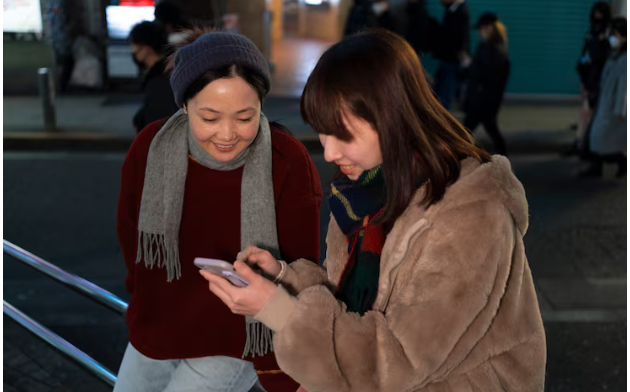
It’s actually unclear if the trend will result in any long-term changes in how young people interact with their primary gadgets. In Shimokitazawa, the majority of people with vintage flip phones also own smartphones. The flip phone is not a long-term substitute; rather, it is a statement, a mood, and a break. However, the fact that the remark is being made frequently and with a genuine creative investment in its appearance reveals something about the true source of tiredness.
