

The British High Court issued an order in May 2003 extending Mary Bell’s lifetime anonymity to include her daughter and, later, her granddaughter. The 1984-born daughter had done nothing wrong. She hadn’t done anything to attract attention from the public. She was born to a woman who had strangled two preschool boys in Scotswood, Newcastle, when she was ten years old. The court decided that this fact was insufficient to deny the daughter the opportunity to start her own life without being known as the child of England’s youngest female murderer.
At the age of eleven, Mary Bell was found guilty of manslaughter in December 1968 after a trial at Newcastle Assizes. The court’s evaluation of her mental state—she had been diagnosed with a psychopathic personality condition before the trial—was reflected in the finding of diminished culpability, but it did not lessen the seriousness of the incident. There were two deceased small children. Both Brian Howe’s and Martin Brown’s families have lost sons. After being detained for twelve years, Bell was freed in 1980 at the age of twenty-three. She rebuilt her life under a number of false identities.
Her daughter’s birth in 1984 gave the anonymity issue a new dimension that the initial court order was not intended to handle. As Bell’s daughter got older, British journalists and tabloid editors learned of her existence, and the possibility of being identified—either directly or through close contact to her mother—became a genuine worry rather than a theoretical one. In response to that risk, the High Court’s 2003 ruling legally expanded the protective umbrella to include a person who had likely grown up knowing very little about her mother’s past, or at least knowing it in the private way that family knowledge operates rather than through public exposure.
In contrast to the press freedom grounds that tabloid newspapers usually make in anonymity cases, the legal argument was based on the right to private and family life under the European Convention on Human Rights. The court determined that the public’s desire to know the daughter’s identity was surpassed by her right to live without being pursued because of the identity she was born into. Not everyone agreed with that finding. Over the years, the victims’ relatives have discussed how terrible it was to know that Bell was living under protected anonymity as they dealt with their children’s irreversible loss. That suffering is genuine and totally comprehensible. It was not intended to be resolved by the court’s ruling.
The case brought up—and still raises—a more general debate regarding the boundaries of criminal punishment. The law itself acknowledges that a separate paradigm for understanding guilt applies at the age of ten, which is when Mary Bell committed her crimes. She completed her sentence. Fourteen years after those events, a mother with a new name gave birth to her daughter. The daughter was not involved in the 1968 events in Scotswood. The court rejected the legal argument that she should nevertheless have a publicly visible connection to those events by identifying herself as Bell’s child.
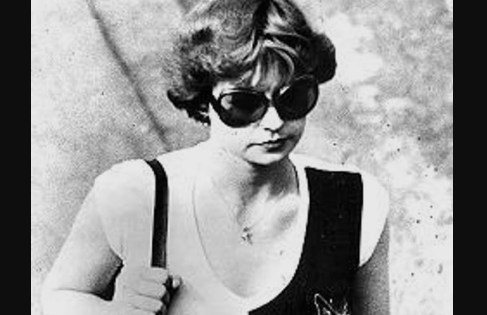
It is illegal to report Mary Bell, her daughter, and her granddaughter’s current whereabouts or situations. The court injunction is still in effect. It’s possible that all three of them are going about their daily lives in Britain under unremarkable names. It’s also likely that they’ve come upon the type of local discovery that court orders are unable to completely stop. The legal safeguard ensures that identification cannot be the outcome of intentional public or media inquiry. Whatever life Bell’s daughter has created, it has been constructed behind a wall that the court said she was entitled to.
