

Many individuals are familiar with a particular type of Tuesday night without particularly relating it to anything systemic. Before you’ve had a chance to determine whether you were truly hungry, you open a food delivery app, select something, and the order is placed. No wallet was found. No money was counted. No friction that could cause someone to reconsider. The food shows up. Three days later, the price shows up on your statement, somewhat more than you recall due to a delivery cost, a service charge, and a pre-selected eighteen percent tip. Making a sandwich would have taken more time than the entire process.
It’s not an accident that the experience was smooth, quick, and a little more costly than anticipated. It is the result of a design discipline that has been honed over about 20 years of mobile commerce. It is based on an obvious and well-established principle: the more difficult it is to spend money, the less of it is spent. Spending rises when the challenge is eliminated. This discovery informs the entire architecture of contemporary consumer apps. All of these features—stored payment information, one-click shopping, pre-selected selections, and automatic reordering—are designed to reduce the time between an impulse purchase and a transaction.
This is further enhanced by recommendation algorithms. The products that appear on a streaming platform or shopping app are not just popular; they are not chosen at random. They are selected using a comprehensive model of your previous actions, including what you clicked, what you hovered over, what you purchased and returned, and how long you spent perusing a specific category. That algorithm does a great job of predicting what you are likely to purchase next, including items you had not anticipated looking for. It’s not an attempt to make an abstract estimate about your tastes. It involves attempting to pinpoint the precise moment when you are most likely to make a certain purchase and placing the item in front of you at that precise moment.
The aspect of this that receives the least public attention is dynamic pricing, perhaps because it is the hardest to identify in real time. The cost of a hotel stay, a ride-sharing journey, or a food delivery order is not set in stone. It reacts to weather, local demand, time of day, and even indications derived from your own app use. The price you see is influenced by the app’s knowledge of your usage patterns, such as your tendency to place orders regardless of price when it’s raining on a weekday evening. The majority of customers lack a way to confirm if the price they were given was the same one displayed to someone else under comparable circumstances, and the pricing is customized in ways that go much beyond simple surge pricing.
The long-term financial drain usually builds up most subtly at the subscription tier. The majority of digital services have an auto-renewal structure by default, which places the onus of cancellation on the customer rather than the supplier. Because the cancellation procedure involves active effort, sometimes an unexpected amount of it, with confirmation screens, retention offers, and contact forms that don’t exactly function on the first try, services that are used once and then forgotten continue to bill regularly. People routinely underestimate their monthly subscription spending by a considerable amount, frequently by a factor of two or more, according to consumer surveys.
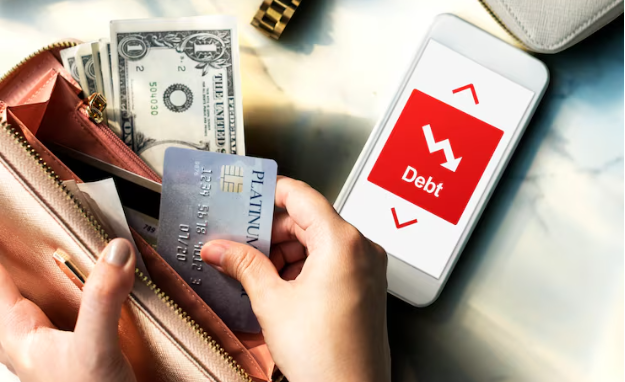
It’s difficult to ignore the fact that all of these mechanisms work together to create a spending environment that is deliberately made to obscure the connection between cost and choice. By substituting abstract numbers that are more difficult to measure intuitively for actual monetary values, digital tokens and app-specific currencies—the points, credits, and coins that mediate transactions in gaming applications, food platforms, and loyalty programs—complete the picture. This is a well-established psychology. It is easier to spend money that doesn’t appear to be money. Through years of iterative design, the observation has been subtly incorporated into the daily commerce infrastructure. Although acknowledging the system is undoubtedly the first step in any sincere response to it, it does not instantly negate it.
