

The guest list has evolved in ways that would have looked unthinkable ten years ago if you were to walk inside the backstage area of a mid-tier fashion week presentation today. The well-known names—the bookers, the agents, and the editorial contacts from old print titles—remain. However, among them are individuals whose professional presence is gauged by engagement rates and follower counts rather than campaign credits; some of these individuals developed their fan bases by sharing outfit photos from their apartments in places that aren’t on the conventional fashion calendar.
Although the change has been developing for some time, the numbers have become so acute that marketing directors can no longer view it as a trend to keep an eye on from a distance. Instead of allocating that revenue to a single celebrity face, almost 73% of large fashion brands now allocate at least a portion of their influencer spending to micro and mid-tier producers, or those with audiences between 1,000 and 100,000 followers. The economic reasoning is rather simple. A supermodel or A-list celebrity deal is far more expensive, reaches a large and frequently poorly targeted audience, and creates awareness that is infamously hard to link to actual purchases. For a small portion of the price, a micro-influencer in the sustainable fashion industry with 40,000 active followers can generate quantifiable sales on a Tuesday afternoon.
The trust dimension was more difficult to comprehend and is currently a challenge for fashion firms. A major model’s appeal in a commercial was always partially aspirational: you are purchasing something that puts you in close proximity to the exceptional person wearing it. In some situations, that reasoning still makes sense. However, it performs less consistently on platforms where conversational, informal, and personal communication predominates. A campaign image carries a different kind of weight than a post from someone whose entire persona is based on a sincere passion for ethical production, vintage couture, or dressing for a certain body type. Instead of being a message from someone hired to stand in front of an expensive object, the tip comes across as advise from someone you truly know.
This dynamic has been significantly accelerated by TikTok. Smaller creators may now immediately add trackable buy links to their material thanks to the platform’s affiliate structure, transforming what was once a soft brand awareness exercise into something with measurable conversion at the end. Sales can be generated by a creator with 20,000 followers who posts an honest assessment of a new jacket, including the fit details and small complaints along with the things she truly likes, in contrast to a polished advertising photo. Contrary to popular belief, the imperfection contributes to its effectiveness.
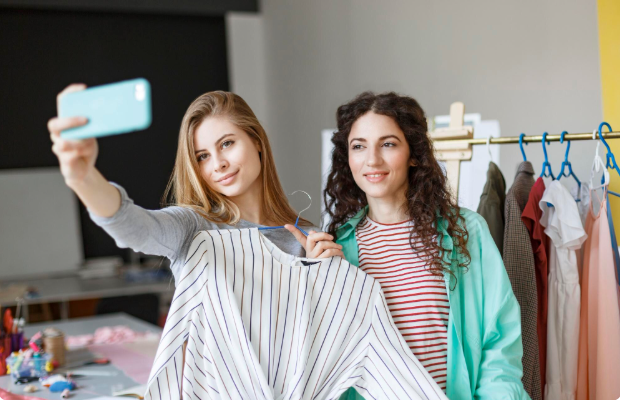
This model has genuine problems that should be taken carefully. A single well-managed celebrity contract does not provide quality control issues when working with a dispersed network of thirty or forty independent creators. The voice of a brand may stray. Communication may become erratic. Audiences are rather adept at seeing a change in a creator’s real enthusiasm for a product from one season to the next. Whether fashion houses have developed the internal infrastructure necessary to handle creative connections at scale without sacrificing the authenticity that first made those relationships desirable is still up for debate.
