

When it occurred, José Eustáquio was watching from Toronto. The ball fell from Stephen’s chest and curled into the corner while he was seated with his older brother Mauro, a former professional football player who currently coaches Inter Toronto FC. For the first time in its history, Canada advanced to the World Cup final 16.
“The chest control, the control of the ball, and a perfect shot into the corner,” José stated afterward, breaking down the goal with the instinctual fluidity of someone who grew up loving this game. “I mean, it couldn’t be better than that.”
The Eustáquio family’s journey to that objective began in Nazaré, a Portuguese coastal fishing village where Stephen’s parents, Esmeralda and Armando, were raised before making the decision to relocate. As part of a wave of Portuguese immigrants who migrated to Canada in search of better opportunities during the second half of the 20th century, they arrived in Leamington, Ontario, in 1997. As a professional fisherman, Armando discovered comparable employment on Lake Erie. Esmeralda was employed at a fish plant in the area. Mauro and Stephen, who was born in Leamington, were enrolled in local football programs at an early age.
The family’s passion for football was deeply ingrained and essentially unexplained, much like it is throughout much of the Portuguese population in Canada. José described how growing up, relatives in Portugal would play on cobblestone roads and build balls from rolled-up socks.
You don’t learn to love football that way because someone tells you to. You learn it because there’s nothing else, and then later, because nothing else feels the same. Canada is home to roughly half a million individuals of Portuguese origin, and for many of them, the sport has functioned as a thread connecting old country to new – something transported across the Atlantic that didn’t require translation.
When Stephen was only seven years old, the family moved back to Portugal since both Eustáquio brothers had significant talent at a young age to ensure the boys’ proper football development. They played and trained there before making their way through the European club system. Stephen eventually made it to FC Porto, one of the mainstays of Portuguese football, before relocating to Los Angeles FC earlier this year.
Stephen, who was eligible for both Portugal and Canada, choose Canada as his national team. He was twenty-two. He remarked at the time that he had huge hopes for the program. José, his cousin, thought the choice also had to do with appreciation. “At the core of the family has always been the love and affection for what Canada had provided them, an opportunity for a better life, and so he was always proud of that,” Jose added.
Esmeralda died in April 2023, from brain cancer. Armando followed a year later, from a heart attack. Both gone before the World Cup. After the South Africa game, Stephen walked the field with an emotive expression that made it obvious he wasn’t only thinking about the scoreboard, demonstrating the weight of those defeats. José muttered, “We knew that he was having thoughts of his parents and his brother.”
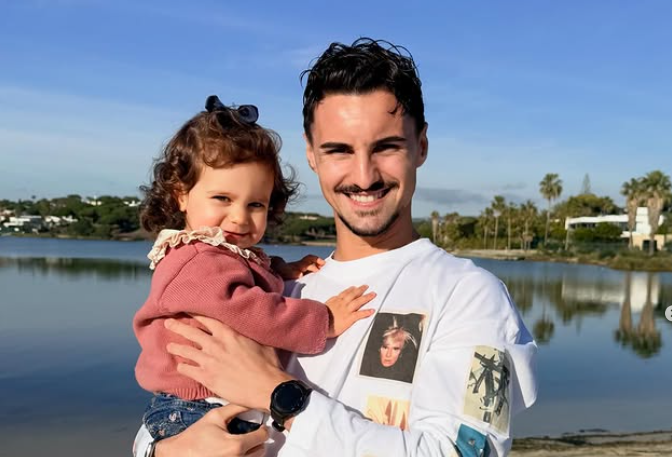
After the game, Jesse Marsch, the head coach of Canada, expressed what everyone was already feeling. Perhaps Steph is the most worthy of such a moment among a group of amazing people. I’m really thrilled for him, and I believe his parents are observing from someplace.
