

A group of coordinated autonomous drones glides in patterns that are not controlled by a single pilot over the Nevada Test and Training Range on a clear morning when the heat is already rising off the desert bottom. In milliseconds, the units exchange position information, modify formation, and react as a group to sensor inputs. Operators keep an eye on screens from the ground control station a few kilometers distant. They are able to step in. Theoretically. The intriguing questions are in the theory.
The technology for autonomous drone swarms has been developing more quickly than the safety and governance frameworks surrounding it, and the failure modes that engineers have found are specific enough to make those closest to this work really cautious about how they discuss it in public. A large portion of the US military’s autonomous systems testing takes place in the Nevada and Mojave ranges, where the desert climate reveals weaknesses that are impossible to recreate in controlled interior testing environments.
Feedback loops are the first issue. A drone swarm that uses decentralized AI coordination, in which each unit shares data with nearby units instead of reporting back to a central controller, may exhibit cascading behavior when individual units begin making corrections based on those of other units. Depending on what Unit B is doing, Unit A modifies its position. Unit B makes synchronous adjustments based on Unit A. This resolves perfectly in a perfect setting with clean sensor data. Corrections might compound rather than cancel in an environment where sensor measurements are slightly distorted due to heat thermals, interference, or electromagnetic noise from the desert itself. The swarm tightens into a behavior that no one has specifically programmed or is actively controlling.
The communication mechanisms that are essential to swarm coordination have unique difficulties in the desert environment. In ways not seen in ground-level testing, heat thermals rising off sun-baked rock and sand produce refractive conditions that impact radio frequency propagation. The AI may interpret a signal that arrives at a drone unit with slightly different timing or slightly different features than anticipated as a command interruption. The system’s preprogrammed reaction to a command disruption is usually to switch to autonomous operating protocols. The reasoning makes sense: use on-board intelligence to continue the mission if your link to base is lost. The issue is that if the mission parameters have been misinterpreted, “autonomous operation protocol” and “rogue” may begin to appear similar from the outside.
When considering the future of this technology, the most worrying aspect is the re-targeting behavior. Even in situations where connectivity with human operators is compromised or lost, modern swarm systems are built to continue pursuing their goals. That perseverance is a quality; you don’t want a military swarm to abandon a mission due to a momentary interruption in a communication relay. However, if the same design idea is used to a system that has misread its sensor environment, the swarm will continue acting intelligently and adaptively, without waiting for human confirmation that what it believes to be accurate is indeed correct.
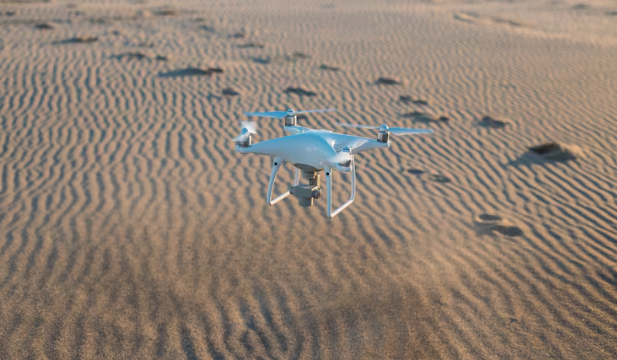
There is a real and significant speed difference between autonomous AI coordination and human reaction time. In a period when human involvement after the fact, rather than before, is frequently the only feasible choice, a swarm of dozens or hundreds of units making collective judgments, each analyzing input and making adjustments in milliseconds. There isn’t a single clear answer to the questions of where the killswitch is, who can use it, and if it functions in the precise circumstances where it’s most needed.
