

Something unusual was taking place on a Tuesday nite in February at a suburban New Jersey multiplex that would typically be operating at around thirty percent capacity. The lobby had a beer and nacho smell. At the concession booth, there was a line. A Champions League knockout match was being watched by several hundred spectators inside one of the larger auditoriums on a screen about seventy feet wide, with surround sound recording every tackle in the chest. The movie on the marquee outside had been out for a few weeks. It didn’t appear to bother anyone.
That image, which is spreading throughout US, UK, and European movie chains, is the best representation of the theater industry’s current state following years of highly visible challenges. The streaming era significantly altered the economics of operating a theater on days when no Marvel movie is opening, but it didn’t completely destroy movie theaters—they persisted, and some tentpole titles still bring sizable crowds. Unexpectedly, one of the most workable solutions to the Monday–Thursday issue is live sports.
Once you know how movie theater income truly operates, the financial reasoning becomes clear. Particularly in the first few weeks of a movie’s release, when studios take the biggest cut, theaters retain a very tiny portion of ticket sales. Concessions, such as popcorn, sodas, and pricey candies that are four times more expensive than those found in supermarkets, are where the true margin is found. A sports enthusiast who watches a three-hour game consumes more food and beverages than someone who watches a typical feature film. They tend to arrive in groups rather than alone, arrive earlier, and stay later. Live sporting events can easily surpass a poorly attended movie nite in terms of concession earnings.
Additionally, theater operators find the attendance timing argument to be persuasive. Even well-performing chains run almost empty houses over large portions of the calendar when Hollywood releases are concentrated around the holidays and summer. A boxing pay-per-view, a Formula 1 grand prix, or a major football final all have set dates and crowds that are already emotionally committed before they purchase tickets. When a new movie is released, there is no longer much question about whether or not the public will go until the first weekend.
Even tho it sounds like marketing speak, the immersion case for sports on a big screen is genuine. It makes sense to watch a game on a 65-inch TV at home. No matter how good the television is, a living room setup cannot match the sensation of watching the same match on a seventy-foot screen with calibrated sound in a room full of people who are reacting simultaneously. Surprisingly well, the social aspect of sports fandom—the group moan, the shared celebration, the strangers giving each other high fives in a way that doesn’t happen during a movie—translates into a movie theater.
However, it’s important to be open about the restrictions. Major leagues and networks have considerable control over where and how their material can be broadcast, making the rights landscape for live sports broadcasting complex and costly. The economics of obtaining high-quality sports rights at scale continue to be difficult, and theater chains lack the purchasing muscle of broadcasters. Instead of completely replacing what streaming has undermined, live sporting events in theaters may be a helpful addition to the film industry. The establishments that are successful with this strategy typically combine it with better food and drink options, first-rate seating, and a more expansive “event” positioning that sets them apart from the home viewing experience.
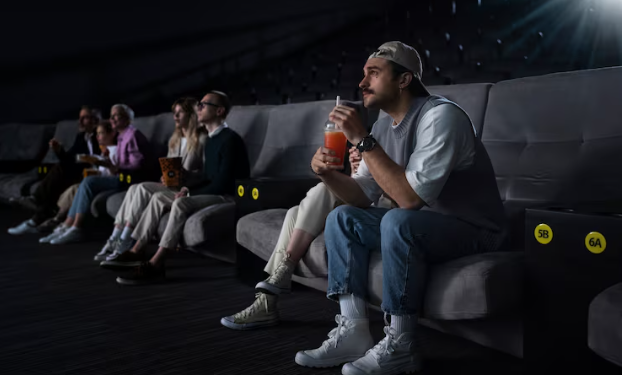
There is a cautious logic to what the more skilled theater operators are doing as this develops. They’ve realized that the unique features of a movie theater—a sizable communal area, a social experience, and a setting intended for group focus—map onto sports just as effortlessly as they do onto movies. The long-term viability of the economics is still up for debate. However, the Tuesday nite in New Jersey indicates that there is an audience, which is typically where these things begin.
