

A photographer may park a silver vehicle on a residential street with windows cracked and a long-lens camera resting on the passenger seat for six hours on any given afternoon in Los Angeles. They’re holding out. They might have gotten a tip from a waiter at a restaurant, from someone who saw a car in a garage, or from a network of informants established over years with little financial payments. If they manage to obtain the desired photo, it may fetch several hundred bucks. Alternatively, it could sell for far more if the subject is in the appropriate kind of trouble and the timing is opportune.
This is how the celebrity photography industry operates on a daily basis, and it is considerably different from how its supporters or detractors typically characterize it. Although it is becoming less common, the picture of a group of photographers rushing someone outside a nightclub is real. What’s more prevalent, but much less obvious to the general public, is a more subdued, methodical business that has evolved over decades to withstand legal challenges, technological advancements, and shifting celebrity behavior. In some ways, this business is now more ingrained in the entertainment industry than it has ever been.
A wide range of newspapers, including TMZ, People, US Weekly, Daily Mail, and dozens of smaller outlets worldwide, license photos from the major Los Angeles-based agencies Backgrid, X17, Mega, Splash News, and The Image Direct. In February 2024, Shutterstock purchased Backgrid, the biggest and possibly most well-known, placing celebrity photos into a much broader commercial content infrastructure. Backgrid has its own copyright enforcement department and licenses its photographs to almost all major entertainment outlets. In 2022, Backgrid filed a lawsuit against Twitter for posting images without permission. In the late 2000s, X17, whose co-owner Brandy Navarre once called its photographers “stay up all night and roam the city,” filed a $7.6 million copyright infringement case against blogger Perez Hilton. X17 has been in business in Los Angeles since the 1990s. When it comes to image rights, the legal violence is sometimes just as severe as the methods used to get them in the first place.
Since Ron Galella developed the industry’s defining tactical toolbox in New York beginning in the 1960s, it has remained remarkably stable. In order to catch people off guard, Galella would pose as a waiter or hide in bushes outside of restaurants. Eventually, he was subject to court orders requiring him to keep a specified distance from particular people. At the time, his methods were viewed as extreme. These days, many of them are commonplace. The major method for finding subjects is still through informant networks, which include hotel concierges, restaurant hosts, club employees, and personal assistants. Regular payments, loyalty, and discretion help to sustain these relationships. When a photographer gets a tip, they typically start working within minutes.
The economics at the bottom end of the market has undergone major shift. Ten years ago, three or four outlets could consistently purchase a clean picture of a well-known star on a Malibu street. Social media has significantly reduced that value; if a picture is shared anywhere, it spreads relatively instantly, making it challenging to retain exclusivity and more difficult to defend per-image license rates. In response, the industry has simultaneously moved in two different directions. The first is the high-value exclusive: pictures of truly noteworthy events, such as relationships being confirmed or rejected, times of crisis or revelation, that nonetheless fetch premium fees due to their high enough news value to generate traffic. The second is the overtly organized photo, which the industry refers to as a “pap walk,” despite the fact that the phrase understates how structured the setup is frequently.
The staged shot is arguably the most fascinating development in the real world of celebrity photography, and it should be well understood rather than discussed in whispers. The photographer arrives after a publicist calls an agency and gives them a location and a window of time. Images are taken when the celebrity shows up, walks, and engages with their companions. A selection of photographs are sent to the publicist, who then approves the ones that are distributed. They are licensed as candid street photos by the agency. Although no one officially acknowledges it, everyone involved is aware of what transpired. This is provided as a service by significant organizations like Backgrid, X17, and others. It’s no secret in the business; in early 2024, Backgrid used this identical approach to film an entire fashion campaign on the streets of Los Angeles for the Italian brand GCDS. The entire process was presented as a conscious creative decision.
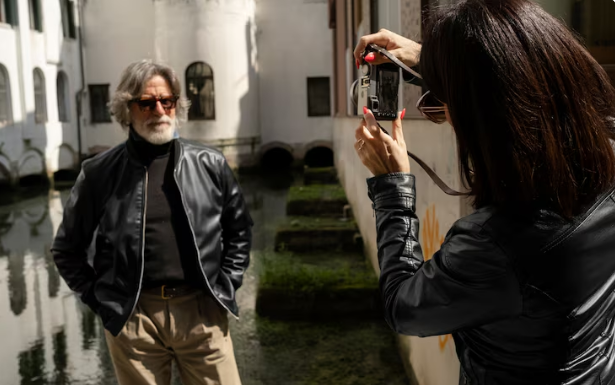
The pursuit of photos that subjects actively refuse to have shot is what is still truly unregulated and where the moral and legal issues are most pressing. Because anguish and conflict are what tabloid audiences have historically been marketed, provoking a reaction by yelling insults or packing someone into a parking structure results in images that are far more valuable than a calm stroll to a coffee shop. In the 1990s and early 2000s, high-speed car chases caused major collisions and forced California to tighten its anti-paparazzi laws. These incidents continue to happen frequently enough for security experts to consider them a typical risk category when organizing celebrity movements. Although they are not flawless, the legal deterrents do exist. There is still a financial motivation to push boundaries.
