

An editor is sitting by themselves in front of a timeline full of takes in a room somewhere in Burbank, Soho, or wherever post-production work actually takes place. One scene could have forty different variants. An performer tries the line one way, then another, and the director requests something completely different. The video lasts for several hours. Ninety seconds will be displayed on the screen. While the director is already discussing the movie in press interviews, the editor discreetly works for months to decide which ninety seconds to use, in what order, and how much time to leave between cuts.
For a long time, film editors have argued for that kind of acknowledgment. The dispute is not new, but it has recently been more acute, in part due to the abundance of content produced by the streaming era, which has made viewers more conscious of the differences between a well-made picture and one that merely uses quality source material. That gap is often found in editing. Even with an excellent script and a gifted cast, a movie with poor pacing might still feel lacking. Seldom is the editor recognized by the audience as the missing variable. However, those working in the field are well aware of where to search.
Anyone who hasn’t seen an editor in action will find it extremely difficult to understand what the trade entails. For every hour of video that is turned into a final cut, a director records about twenty hours of raw material. When the footage is compiled and analyzed, the editor’s goal is to identify the version of the tale among all of that information, not to accurately replicate what was planned on set. Better line readings from many takes take the place of poor ones. Because the performances revealed something unexpected, scenes that were intended to convey exposition are rewritten to convey emotion instead. Careful sequencing fills in any plot holes that arose while filming. None of this is used as an intervention in the final movie. The movie seems to be just functioning.
This argument has been stated openly and particularly for years by Thelma Schoonmaker, who has edited Martin Scorsese’s films for decades and won three Academy Awards in the process. She has consistently challenged the societal norm that views the director as the only person responsible for a film’s success, describing editing as a main art form rather than a supporting role. The most obvious proof that authorship is produced in the cutting room is her career. However, she is not unique; rather, she is the most well-known illustration of a phenomenon that is prevalent throughout the industry and continuously overlooked.
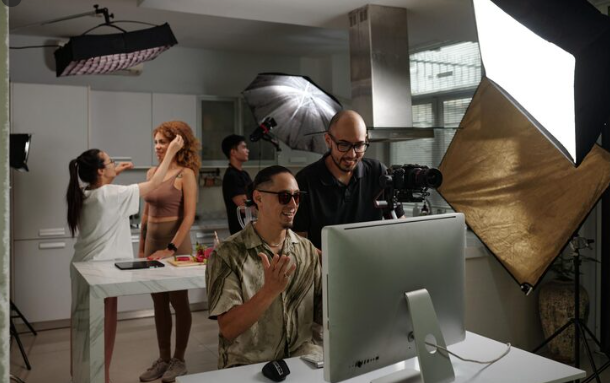
Instead of reflecting reality, the billing and compensation disparity is a reflection of the misperception. Pay scales that prioritize on-set roles over post-production work regardless of creative contribution, below-the-line credit placement, and exclusion from poster campaigns and promotional materials all reflect an outdated conception of filmmaking that differs from what actually occurs in a contemporary production. The issue is frequently exacerbated by inexperienced filmmakers and low-budget projects, who hire editors late, pay them little, and treat the post-production stage as an afterthought rather than as the moment when the movie takes on its final form.
