

Between Saudi Arabia and Bahrain, Qatar is a tiny peninsula that protrudes into the Persian Gulf. It is about the size of Connecticut. By regional standards, it was mostly unremarkable for the majority of its contemporary history. The magnitude of Qatar’s natural gas reserves then became apparent in the 1970s and, more significantly, in the 1990s, and the country’s course began to shift in ways that are still being felt today. The Al Thani family, who have ruled Qatar for many generations, are now in charge of a nation perched atop one of the world’s biggest natural gas reserves. The Al Thani family’s net worth is a very intriguing and challenging subject to exactly answer because of what they accomplished with that position.
The estimated total family wealth is approximately $335 billion, but most researchers agree that this is an estimate rather than a confirmed amount. The problem with royal family fortunes in Gulf states is that it’s not always easy to distinguish between private and public wealth in a way that would enable a financial auditor to arrive at a conclusive figure. The family controls state structures that receive the profits from Qatar’s exports of liquefied natural gas, and sovereign investments that are officially public assets coexist with the vast personal holdings of individual family members. In theory, the two streams can be distinguished, but in reality, they are hazy.
The formal institutional aspect of this wealth is overseen by the Qatar Investment Authority. It is one of the biggest sovereign wealth funds in the world, with estimated assets of $450 billion to $500 billion or more. Qatar is now one of the more prominent institutional investors on the international scene thanks to the QIA’s investments in European financial markets, infrastructure, real estate, and company stakes. The Gulf states have been pursuing this strategy with varying degrees of urgency and sophistication since the oil price crashes of previous decades showed the risk of concentration. It is the means by which the family’s resource wealth has been methodically diversified away from direct hydrocarbon dependency.
London is the most obvious place to tell a portion of the story. Some of the most recognizable properties in the British capital are owned or controlled by the Al Thani family and Qatari state enterprises. The majority of the 310-meter glass structure known as The Shard, which currently marks the south bank of the Thames, is owned by Qataris. In 2010, Mohamed Al Fayed sold Harrods, a department store in Knightsbridge that serves as something of a national icon in the eyes of foreign visitors to London. Additionally, the family has a significant stake in Heathrow Airport, one of the world’s busiest aviation hubs. A substantial presence in a single market, the estimated total holdings in London and the UK are at least $50 billion.
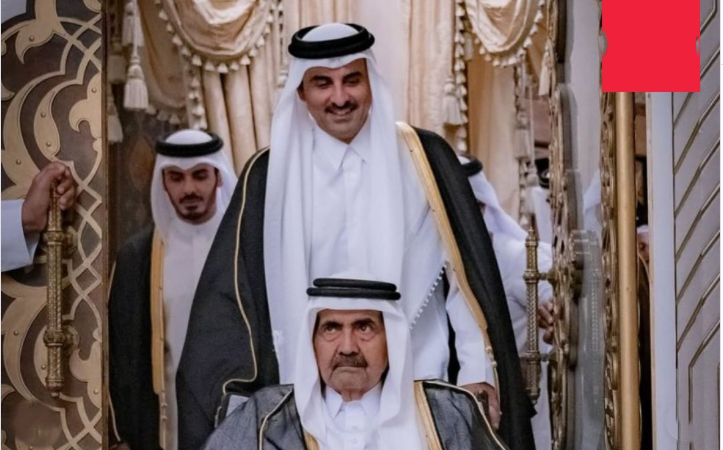
The current Emir, Sheikh Tamim bin Hamad Al Thani, is estimated to have a personal net worth of about $2 billion. This amount may seem insignificant in comparison, but it illustrates how much of the family’s overall wealth is held in state institutions and the QIA rather than in personal accounts. In 2013, he became Emir following the voluntary resignation of his father, Sheikh Hamad, which is a relatively uncommon change in Gulf monarchies. Qatar’s hosting of the 2022 FIFA World Cup, which attracted attention to Qatari investment and government from both positive and negative perspectives, has influenced his prominence.
The connection between this level of wealth and the question of what it truly means is worth mentioning. The Al Thani family’s wealth is largely due to their position as the ruling family of a nation that just so happened to be sitting on a massive hydrocarbon deposit at a time when the world needed a lot of it, rather than individual entrepreneurship or investment savvy. Deliberate and persistent efforts have been made to transform that resource wealth into a variety of global assets, including real estate, financial stakes, infrastructure, and sports. There is no simple answer to the question of whether that diversification will be enough to keep the family’s position as the world economy changes.
