

The vocabulary used in upscale dermatology offices in Beverly Hills or the Upper East Side of Manhattan has changed significantly in recent years. Exosomes, secretome injections, and regenerative scalp procedures are now frequently discussed instead of minoxidil and transplant consultations, which used to be the main topics of discussion. The pamphlets are glossy. The employees have received good training. Additionally, the cost, which varies based on the clinic and ranges from a respectable used car to a minor remodel, indicates that whatever this is, it is being marketed as medication for those who want outcomes. Before every credit card is given out, it is important to pose a straightforward question: what is really going on in that room, and does the science behind it align with the marketing?
The truth is more complex than either supporters or detractors usually acknowledge. About half of men over fifty and a sizable portion of women experience hair loss; this is a large market that has historically been ignored by medicine and overserved by questionable treatments. It is true that stem cell research has provided fresh insights into the functioning of follicles and the reasons behind their deterioration. However, stem cell therapy in the strict sense is not what upscale clinics are currently offering.
Injecting exosomes or secretomes, signaling molecules produced from stem cell cultures, into the scalp to stimulate dormant follicles is more akin to a sophisticated kind of follicle stimulation. For those who still have living follicles to deal with, it can increase density and thickness. It doesn’t use scar tissue to create new follicles. This distinction is really important, yet it’s not typically included in the consultation.Right now, what’s available is basically premium fertilizer for scalp soil that still contains seeds. How dormant the seeds are will determine whether or not they sprout.
As of 2026, true hair cloning—the concept of taking one follicle and multiplying it into thousands, virtually an endless supply of donors—is not a commercially available process anywhere in the world. There should be at least some skepticism regarding the next round of timeline projections because it has been debated for decades and always seems to be five years away from clinical availability.
PP405, a topical medication created by Pelage Pharmaceuticals that specifically targets hair stem cells without interfering with hormones, is what is actually progressing and has far greater credibility. It is currently undergoing late-stage studies and has the potential to change the therapy landscape in a way that exosome injections, no matter how improved, just cannot if it passes the remaining regulatory obstacles. Shiseido’s proprietary cell-based treatment is available in a few foreign countries. There is a pipeline. It simply hasn’t arrived in its completely authorized version yet.
Watching a new medical category emerge in this manner has a subtly familiar feel to it: the high-end early-adopter clinics, the expensive experimental procedures for the wealthy, and the research that lags slightly behind the business.
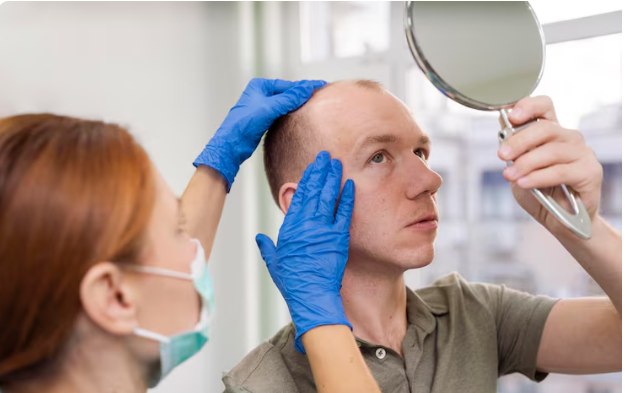
A few things are worth holding onto for anyone who is really thinking about these treatments. As of this year, there is no FDA-approved stem cell technique for hair loss in the US; these procedures are by definition exploratory, and clinics that use them are working in a regulatory gray area that isn’t often fully disclosed. The majority of protocols need maintenance every twelve to eighteen months, which is expensive and ongoing.
The more established surgical options, such as follicular unit extraction and direct hair implantation, continue to be the most reliable route to long-lasting results for individuals with advanced, diffuse loss or significant scarring, and the current regenerative injections are unlikely to provide the density they’re hoping for. How soon the truly promising drugs will become widely available in clinical settings is still unknown. However, the direction of the research is the most reliable it has ever been, and that isn’t marketing, at least.
