

Diego Maradona Jr. was born in Naples in September 1986, but it wasn’t until he was twenty years old that his father gave him public recognition. It wasn’t until he was seventeen that he got to meet his father. Any account about him starts with those facts, and in some ways, they are more important than the football since they established the framework for all that followed.
After her relationship with Maradona ended, his mother, Cristiana Sinagra, raised him by herself in Naples. When an Italian court declared in 1993 that he was, in fact, Maradona’s son, he won the legal battle to be officially recognized. As a result, he adopted his father’s last name. It was much later that the emotional realization occurred. They first met in 2003 at a golf tournament in Fiuggi. Maradona did not openly recognize him in the Italian press until 2007. Diego Jr. had already spent years figuring out who he was and the football career that went along with it.
He was a football player. As the question suggests, professionally. His career progressed through lower Italian leagues, including Serie D and the Eccellenza, which are several rung away from the spotlight. The most accurate way to characterize the gap between the two careers is probably to say that no one was watching him play the way they watched his father at Napoli in the 1980s. However, he played regularly for many years. Additionally, he developed something more specialized in beach soccer, playing for the Italian national team and attaining real success at a level where his name was useful but the competition demanded more than a last name.
It’s important to comprehend what it means to play in the fourth or fifth division of Italian football while sharing the most well-known football name in Italian history. Though that framing doesn’t really work, it could be written as a story about failing. Diego Jr. was not the son of a professional football player in the traditional sense; he was raised without his father and without the social infrastructure, coaching, and access that typically enable gifted children of well-known athletes to pursue elite careers. From a starting point that was more intricate than it appeared from the outside, he constructed what he did.
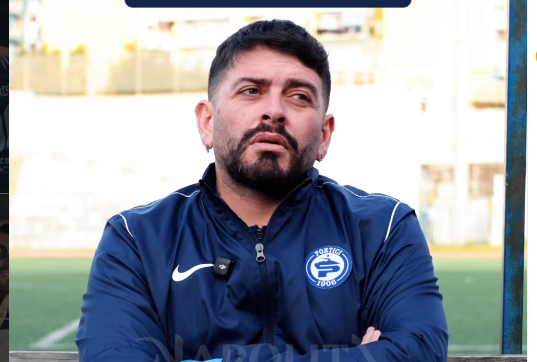
After his playing career came to an end, he transitioned into coaching, which is a normal move for football players who stay involved in the game. He has worked with teams in Italy’s amateur pyramid, most notably as head coach of Portici in the Eccellenza, the sixth division of Italian football, which is competitive in practice but amateur in status in a nation where football is played at every level. It’s a different kind of football life than his father’s, but it’s still football. The decision to remain in Italy, work at that level, and put in the unglamorous work of developing players at clubs with little funding.
Prior to Maradona’s passing in November 2020, Diego Jr. and his father had a publicly complex relationship. There were times when they were in contact and times when they weren’t. Diego Jr. has discussed the challenges of creating a genuine relationship with a man who was both his father and one of the most legendary individuals in sports history. This man was constantly traveling, surrounded by people, enormous in public, and inconsistent in private. Diego Jr. would be the only one to know if they ever actually came to a settled peace.
