
Close Menu
  • Home
  • Banking
  • Celebrities
  • Economy
  • FinTech
  • Industry
  • Markets
Facebook X (Twitter)
Trending
  • 5 Incredible Ways an AI Image Creator Will Transform Your Digital Content Strategy
  • Revolutionizing Content Production: How Conversational AI and Video Editing Unite
  • The Disturbing Rise of ‘Grief Tech’, Chatting With the Digital Ghosts of the Deceased
  • The Man Who Memorized the Internet , A Strange Tale of Digital Hoarding and Savantism
  • Why Theaters Are Desperately Pivoting to Live Sports to Survive the Streaming Apocalypse
  • Why a 20-Year-Old Obscure SEO Patent Just Upended the Entire Digital Publishing Industry
  • London’s Financial Elite Face a Reckoning as Carried Interest Loopholes Slam Shut
  • Why A-List Directors Are Fleeing Traditional Studios for Unregulated Tech Money
Friday, October 9
PurposedPurposed
Subscribe
  • Home
  • Banking
  • Celebrities
  • Economy
  • FinTech
  • Industry
  • Markets
PurposedPurposed
Home » The Monetization of Nostalgia: Why We Are Paying Premium Prices for the Sitcoms of Our Youth
FinTech

The Monetization of Nostalgia: Why We Are Paying Premium Prices for the Sitcoms of Our Youth

Sam AllcockBy Sam AllcockJuly 4, 2026No Comments4 Mins Read
Facebook Twitter Pinterest LinkedIn Tumblr Email
The Monetization of Nostalgia
Share
Facebook Twitter LinkedIn Pinterest Email

There is something quietly strange about paying a monthly subscription fee to watch a show that aired its final episode before you finished high school. Millions of people nevertheless do it without much thought. Friends left NBC in 2004. 1998 saw the end of Seinfeld. 2013 saw the conclusion of The Office. At different times, all three have been among the most streamed programs worldwide; this isn’t due to new episodes, but rather to the fact that the older ones continue to captivate viewers.

The question of why is worthwhile. Not in a cynical way, but genuinely. What is it about sitting on a couch in 2025 and watching Ross and Rachel argue about a break that feels worth the price of admission?

The answer has less to do with quality television and more to do with what the brain does when it recognizes something familiar. Research published in the Journal of Consumer Research found that nostalgic feelings actively reduce how much people care about their money. When someone is emotionally transported to a happy memory — a specific apartment, a particular laugh track, a theme song that hits in the first three notes — their financial guard drops. They become measurably more inclined to spend. Streaming services and studios have not overlooked this. They have centered their entire content strategy around it.

The economics are not nuanced. The Office served as the anchor when NBCUniversal introduced Peacock. It’s a workplace comedy that debuted more than ten years ago, not a brand-new prestige drama or an original movie. Before WarnerMedia pulled Friends for HBO Max, Netflix paid almost $500 million to keep it for an additional year. These choices weren’t made at random. They were wagers on a very particular emotional currency: the sense of security that comes from seeing a film whose conclusion you already know.
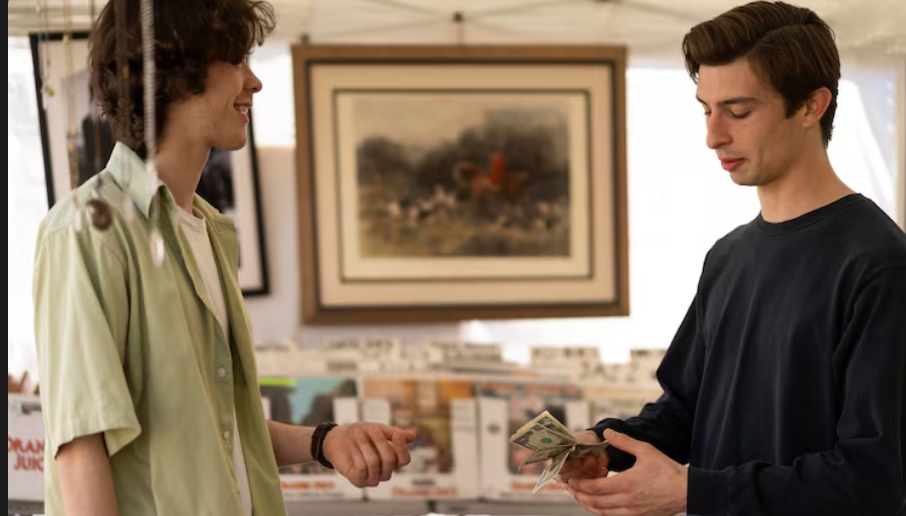
The Monetization of Nostalgia

There is a feeling that the old sitcom serves as something akin to emotional infrastructure in a time of constant uncertainty. Modern television is genuinely excellent — more complex, more cinematic, more socially aware than anything from the 1990s. However, it also makes a request of the audience. You have to pay attention. You have to remember who betrayed whom three episodes ago. All you have to do to watch a rerun of Cheers is to sit there and feel comfortable for thirty minutes. That is a substantial offering.

The streaming wars unintentionally exposed the value of catalog content, or the shows that people grew up watching, which new programming just cannot quickly match. The emotional weight of a new series must be earned. Somewhere in the audience’s memory, a cherished sitcom already has it, just waiting to be activated. You can return to your twelve-year-old self and start eating cereal before school with just one well-known theme song. Food, fashion, and gaming brands have long recognized this mechanism. Eventually, television arrived.

Whether this is a completely healthy cultural habit is still up for debate. An industry that makes the most money when its audience is feeling somewhat uneasy about the present is a little unsettling. During challenging times, such as recessions, unstable political environments, or times of general weariness, nostalgia tends to increase. At the exact moment when people most want to escape the present, streaming libraries are filled with the past.

However, labeling it as manipulation would be too simple. Individuals are not passive. When they rewatch a comfort show for the fourth time, they are somewhat aware of what they are doing. Feeling a certain way for a certain hour is a deliberate decision. The fact that someone is profiting from that decision does not automatically lessen the intensity of the emotion.

The past has simply become very good business. And somewhere in the world, someone is watching a twenty-year-old episode of a show they already know by heart and, in defiance of logic, feeling perfectly fine.

Monetization Nostalgia
Share. Facebook Twitter Pinterest LinkedIn Tumblr Email
Sam Allcock
  • Website
  • X (Twitter)
  • LinkedIn

Related Posts

5 Incredible Ways an AI Image Creator Will Transform Your Digital Content Strategy

September 22, 2026

Revolutionizing Content Production: How Conversational AI and Video Editing Unite

September 16, 2026

The Disturbing Rise of ‘Grief Tech’, Chatting With the Digital Ghosts of the Deceased

August 10, 2026

Comments are closed.

Latest Posts

5 Incredible Ways an AI Image Creator Will Transform Your Digital Content Strategy

September 22, 2026

Revolutionizing Content Production: How Conversational AI and Video Editing Unite

September 16, 2026

The Disturbing Rise of ‘Grief Tech’, Chatting With the Digital Ghosts of the Deceased

August 10, 2026

The Man Who Memorized the Internet , A Strange Tale of Digital Hoarding and Savantism

August 10, 2026
Don't Miss
FinTech

5 Incredible Ways an AI Image Creator Will Transform Your Digital Content Strategy

By Sam AllcockSeptember 22, 2026

In the fast-paced digital ecosystem, compelling visual content is no longer a luxury; it is…

Revolutionizing Content Production: How Conversational AI and Video Editing Unite

September 16, 2026

The Disturbing Rise of ‘Grief Tech’, Chatting With the Digital Ghosts of the Deceased

August 10, 2026

The Man Who Memorized the Internet , A Strange Tale of Digital Hoarding and Savantism

August 10, 2026
About
About

Stay informed with Purposed – your source for reliable news and expert insights. Explore our site for the latest stories and updates.

Email: editor@purposed.org.uk
Email: advertise@purposed.org.uk

Our Picks

Kailyn Lowry’s Son Isaac Comes Out as Gay and Changes Name—Inside His Brave New Identity

June 12, 2025

Joe Bartolozzi and Brooke Armitage Have Broken Up After Four Years — Here’s What Joe Said

July 28, 2026

Inside Hamish Harding’s Billion-Dollar Life Before the Titanic Dive

July 3, 2025
Most Popular

5 Incredible Ways an AI Image Creator Will Transform Your Digital Content Strategy

September 22, 2026

Revolutionizing Content Production: How Conversational AI and Video Editing Unite

September 16, 2026

The Disturbing Rise of ‘Grief Tech’, Chatting With the Digital Ghosts of the Deceased

August 10, 2026
© 2026 purposed.org.uk
  • About Us
  • Contact Us
  • Meet the Purposed Tean
  • Privacy Policy
  • Terms and Conditions

Type above and press Enter to search. Press Esc to cancel.