

Something important is being constructed on a field in Midlothian, a few miles south of Edinburgh. Although the location is located on land that was formerly used for industrial purposes, it wouldn’t appear out of place from the approach road as either a housing development or a logistics hub. One of the biggest single expenditures in UK research infrastructure in recent memory, a building specifically designed to host a national supercomputer will cost £750 million to build and run.
The figure is so high that it raises the obvious question, “What does a nation really get for £750 million worth of computing power?” The solution is a set of skills, each of which is important in its own field, rather than a single dramatic item. Climate scientists are using models at resolutions that are too high for existing systems. Hundreds of thousands of patient files are processed by genomic researchers in a timescale that truly makes population-scale treatment possible. Before anyone needs to synthesize novel substances in a lab, materials scientists simulate their behavior. AI researchers at national labs and universities are training models on hardware without the expenses and limitations of commercial cloud contracts.
Edinburgh has long been involved in this type of activity. For more than thirty years, the University of Edinburgh’s EPCC—the Edinburgh Parallel Computing Centre, which was established in 1990 and is now simply known as EPCC—has been one of the top high-performance computing facilities in the world. It has developed true institutional experience in the operational and scientific aspects of managing systems at this scale by overseeing several generations of national computer facilities. Since it went online, academics from many British universities have made extensive use of ARCHER2, the 23-petaflop system that is currently hosted at the university and is the most potent academic supercomputer in the UK. It will be replaced by the Midlothian facility.
Supercomputers of this size require room, power infrastructure, and cooling capacity, all of which are increasingly difficult to find on university campuses. This is why a new, purpose-built site in Midlothian was chosen over an expansion of existing Edinburgh facilities. Modern high-performance computer systems have high energy requirements—cooling alone accounts for a sizable portion of operating costs—and purpose-built facilities can be positioned and constructed to meet those needs in ways that retrofitting older structures cannot. The Midlothian location provides the acreage, access to the electrical grid, and physical infrastructure needed for a plant of this scale.
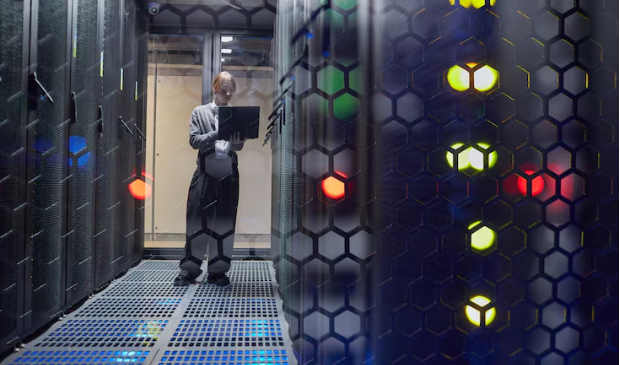
Beyond its size, the timing is what makes this investment particularly intriguing. At a time when the computational infrastructure supporting AI research has grown to be as vitally important as any other research asset, the UK is working to establish a credible national position in this field. Supercomputer-capable governments are able to conduct experiments and simulations that others cannot. Academic communities can train models and test hypotheses that are still unaffordable at commercial costs if they have access to real HPC resources. The £750 million being spent in Midlothian is both an investment in science and a declaration that the UK wants to compete in the race for research infrastructure that is taking place in tandem with the AI investment race.
